Ledger is the world’s largest hardware wallet manufacturer, securing an estimated 20% of all cryptocurrency assets worldwide. Since 2014, their devices have protected billions of dollars in Bitcoin, Ethereum, and thousands of other crypto assets for individual holders and institutions alike.
In 2026, Ledger offers five active models ranging from $79 to $399 — each targeting a different type of user. This review covers all five honestly: what they do well, where they fall short, and which one deserves your money based on how you actually use crypto.
How Ledger Wallets Work: The Security Foundation
Before comparing models, understand what makes any Ledger device secure.
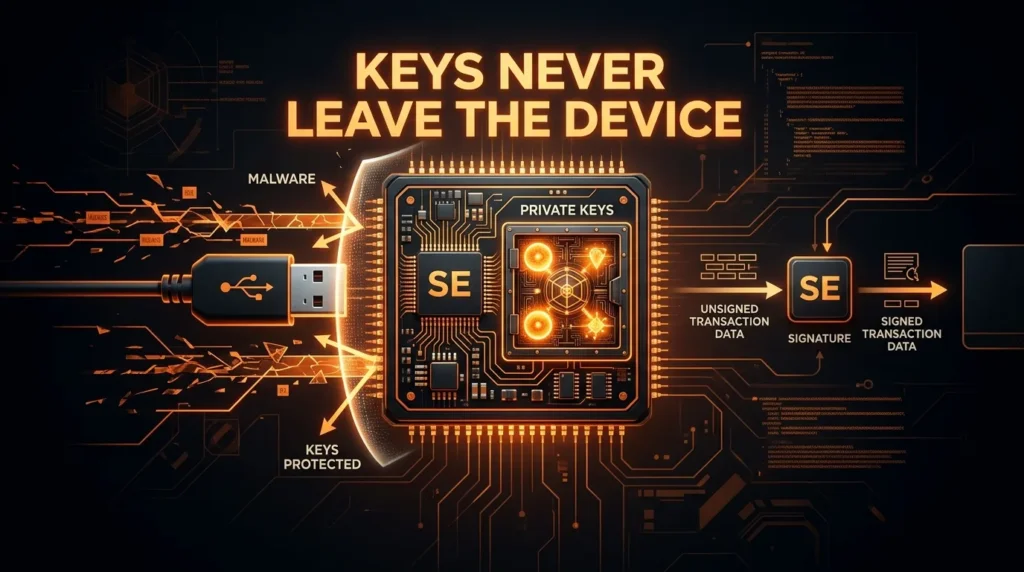
The Secure Element chip: Every Ledger device contains a dedicated Secure Element (SE) chip — the same technology used in credit cards, passports, and banking hardware. This chip stores your private keys in isolated hardware that never connects to the internet. Even when plugged into a compromised computer, the keys remain on the device.
BOLOS operating system: Ledger’s proprietary operating system isolates each app from others. If one blockchain app were somehow compromised, other apps and your keys remain protected.
Physical confirmation required: Every outgoing transaction must be physically confirmed on the Ledger device itself. A malicious website can prepare a fraudulent transaction — but you’ll see the real details on your Ledger screen and must press the physical button (or tap the touchscreen on newer models) to sign it.
24-word seed phrase: Setup generates a 24-word recovery phrase that backs up the entire device. If your Ledger is lost, damaged, or stolen, the same seed phrase restores full access on any compatible wallet.
The Current Ledger Lineup: 5 Models in 2026
Ledger Nano S Plus — $79
The entry point. Everything you need, nothing you don’t.
Specs:
- Secure Element: CC EAL5+ certified
- Display: 1.13″ OLED screen
- Connectivity: USB-C only (no Bluetooth)
- App capacity: Up to 100 apps
- Supported assets: 5,500+
- Battery: None (powered via USB)
Who it’s for: First-time hardware wallet buyers, budget-conscious holders, anyone who primarily manages crypto from a desktop.
The honest take: The Nano S Plus gives you the same fundamental security as every other Ledger — your keys are protected by the same Secure Element chip. The limitations are comfort, not security. The OLED screen is small, verifying long addresses requires scrolling through multiple screens, and there’s no Bluetooth for mobile use. For long-term cold storage where you rarely need to initiate transactions, it’s perfectly adequate. For active traders or DeFi users, the verification experience gets tedious.
Verdict: ⭐⭐⭐⭐ Best value for simple long-term storage. The right first hardware wallet.
Ledger Nano X — $149
The most popular Ledger, adding Bluetooth and mobile freedom.
Specs:
- Secure Element: CC EAL5+ certified
- Display: 1.09″ OLED screen
- Connectivity: USB-C + Bluetooth 5.0
- App capacity: Up to 100 apps
- Battery: 100 mAh (hours of standby, days of intermittent use)
- Supported assets: 5,500+
Who it’s for: Mobile-first users, travelers, anyone who manages crypto primarily from a smartphone.
The honest take: The Nano X’s primary advantage over the S Plus is Bluetooth — you can pair it with your phone and sign transactions without carrying a cable. This is genuinely convenient for people who manage their portfolio on the go. The screen is slightly larger than the S Plus but still requires scrolling to verify full addresses.
The real limitation: The battery. In active use with Bluetooth enabled, it drains faster than expected — some users report 40% battery drop in 15-20 minutes of active use. If you don’t use it regularly, you may pick it up to find it dead when you need it.
The 2026 context: At $149, the Nano X is now sandwiched by the $79 Nano S Plus below and the $179 Nano Gen5 above — which adds a touchscreen and better screen for $30 more. The Nano X remains a solid device, but it’s harder to recommend when the Gen5 exists at a small premium.
Verdict: ⭐⭐⭐⭐ Still excellent for mobile users. Consider the Gen5 for $30 more if you don’t mind the newer design.
Ledger Nano Gen5 — $179 ⭐ Best Overall Value
The most significant Ledger redesign in the company’s history, launched October 2025.
Specs:
- Secure Element: CC EAL6+ certified (upgraded)
- Display: E-Ink touchscreen
- Connectivity: USB-C + Bluetooth + NFC
- App capacity: 8-10 apps at a time (reinstallation doesn’t affect funds)
- Battery: Extended — E-ink is extremely power efficient
- Supported assets: 5,500+
Who it’s for: Anyone upgrading from older Ledger devices, new buyers who want the best balance of price and features.
The honest take: The Gen5 brings the touchscreen and EAL6+ secure element from the $249 Flex down to $179. The E-ink touchscreen makes address verification dramatically easier — you can see full addresses without scrolling. The EAL6+ certification is a meaningful security upgrade over the EAL5+ in older models.
The one compromise: app storage. The Gen5 holds 8-10 apps simultaneously vs. 100 on the Nano X. However, uninstalling and reinstalling apps takes only seconds and never affects your funds or seed phrase — your crypto exists on the blockchain, not on the device.
Verdict: ⭐⭐⭐⭐⭐ Best overall value in 2026. Recommended starting point for most new buyers.
Ledger Flex — $249
The premium daily driver for active DeFi users and frequent traders.
Specs:
- Secure Element: CC EAL6+ certified
- Display: 2.84″ E-Ink touchscreen (larger than Gen5)
- Connectivity: USB-C + Bluetooth 5.2 + NFC
- Build: Stainless steel frame
- Battery: Extended standby with E-ink efficiency
- Supported assets: 5,500+
Who it’s for: Active DeFi users, people who sign multiple smart contract transactions daily, those who value build quality.
The honest take: The Flex is the Gen5 with a larger screen and a premium stainless steel build. If you’re approving DeFi transactions, reviewing token approvals, or verifying smart contract interactions multiple times per day, the larger screen makes a genuine difference — you can see more details at once, reducing fatigue and error risk.
The Clear Signing advantage: The Flex uses Ledger’s Clear Signing technology, which translates complex smart contract transactions into human-readable language on the device screen. Instead of approving raw hex data, you see “Swap 0.5 ETH for 1,200 USDC on Uniswap.” This meaningfully reduces the risk of approving malicious transactions.
The controversy: Like all Ledger devices, the Flex supports the optional Ledger Recover service — a subscription that allows you to back up your seed phrase with third-party custodians (Coincover, EscrowTech). The crypto community has been vocal in opposing this, arguing that any feature enabling seed phrase extraction introduces theoretical risk, even if it’s opt-in. Importantly, this service is entirely optional and doesn’t affect users who don’t subscribe.
Verdict: ⭐⭐⭐⭐ Excellent for active DeFi users. The $70 premium over Gen5 is justified if you sign transactions daily. Overkill for passive holders.
Ledger Stax — $399
The flagship. Designed by Tony Fadell (inventor of the iPod).
Specs:
- Secure Element: CC EAL6+ certified
- Display: 3.7″ curved E-Ink touchscreen (largest in lineup)
- Connectivity: USB-C + Bluetooth + NFC + Qi wireless charging
- Build: Premium curved design with magnetic stacking
- Lock screen: Displays NFTs or custom images
Who it’s for: Power users, collectors, high-net-worth individuals who want the best experience money can buy.
The honest take: The Stax is undeniably Ledger’s most premium device. The curved screen is larger and more comfortable than any other hardware wallet on the market. Qi wireless charging eliminates cables for routine use. Magnetic stacking allows multiple Stax devices to attach neatly together.
Functionally, it runs the same firmware on the same EAL6+ secure element as the Flex. The security is identical. The premium is entirely in experience, comfort, and design.
Verdict: ⭐⭐⭐⭐⭐ Best hardware wallet on the market — if you value premium design and can justify the price. For pure security-conscious buyers, the Gen5 delivers identical protection at $220 less.
Ledger Model Comparison Table
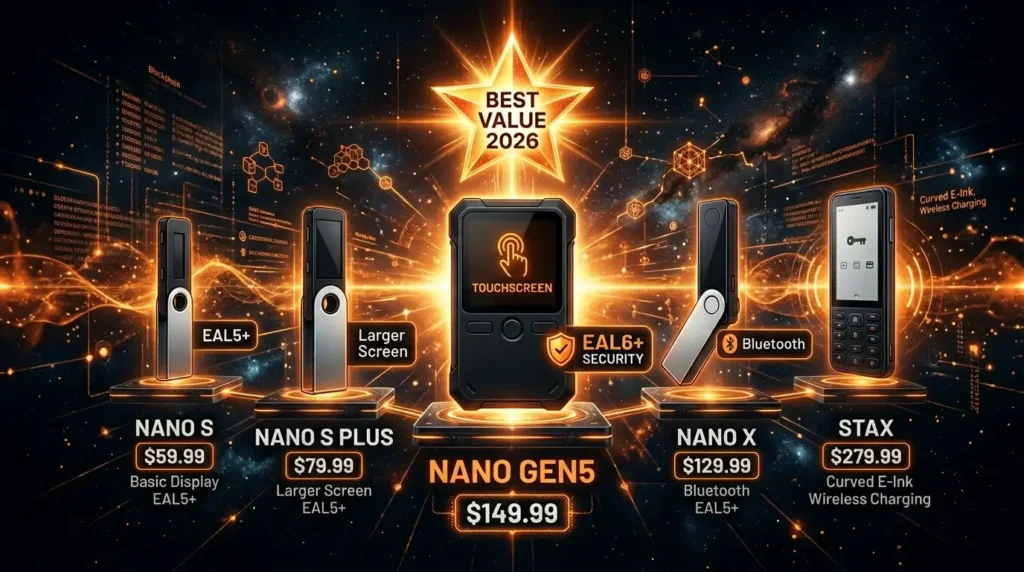
| Model | Price | Screen | Bluetooth | Security | Best For |
|---|---|---|---|---|---|
| Nano S Plus | $79 | OLED 1.13″ | No | EAL5+ | Budget / desktop users |
| Nano X | $149 | OLED 1.09″ | Yes | EAL5+ | Mobile users |
| Nano Gen5 | $179 | E-ink touch | Yes + NFC | EAL6+ | Best value overall |
| Flex | $249 | E-ink 2.84″ touch | Yes + NFC | EAL6+ | Active DeFi traders |
| Stax | $399 | E-ink 3.7″ curved | Yes + NFC + Qi | EAL6+ | Premium buyers |
Ledger Live: The Software Companion
All Ledger devices work with Ledger Live — the official companion app available for Windows, macOS, Linux, iOS, and Android.
What Ledger Live does:
- Portfolio overview: balances across all blockchains in one interface
- Send and receive: all transactions require on-device confirmation
- Buy crypto: fiat purchases through integrated partners
- Swap: exchange crypto through integrated DEX aggregators
- Staking: stake ETH, SOL, ATOM, and others through integrated protocols (Lido, Stader, and others)
- NFT management: view Ethereum and Polygon NFTs
- App management: install/uninstall blockchain apps on your device
The limitation: Some DeFi interactions still require connecting your Ledger to third-party wallets like MetaMask, which adds steps. The Ledger Live ecosystem covers most common use cases but isn’t a complete DeFi interface.
The Ledger Recover Controversy: What You Need to Know
In 2023, Ledger announced Ledger Recover — an optional paid service allowing users to back up their seed phrase with three custodians. The announcement caused significant community backlash.
The concern: The feature requires Ledger firmware to support extracting a seed phrase from the device. Critics argued this introduced theoretical risk even for non-subscribers — if the firmware can extract seed phrases, could a compromised firmware do so without consent?
Ledger’s position: The feature is entirely opt-in. Users who don’t subscribe never share their seed phrase with anyone. The extraction requires active user identity verification and consent.
The community verdict: Many experienced holders remain skeptical. Trezor’s fully open-source firmware (where anyone can verify the code) is frequently cited as the alternative for users who want maximum trustlessness.
Practical impact for most users: If you don’t subscribe to Ledger Recover, it doesn’t affect your security. The device still protects your keys using the same Secure Element as always.
The 2020 Data Breach: Still Relevant?
In 2020, Ledger’s marketing database was hacked, exposing email addresses, phone numbers, and physical addresses of over a million customers. Some users later received targeted phishing emails and physical mail pretending to be from Ledger.
Important: The breach did not expose private keys, seed phrases, or device data. It was a customer database breach, not a hardware compromise. Your crypto was never at risk from the breach itself.
The ongoing implication: If you purchased a Ledger, your email and potentially physical address may exist in criminal databases. Be extra vigilant about phishing emails claiming to be from Ledger. Ledger will never ask for your seed phrase.
Where to Buy Ledger: The Critical Warning
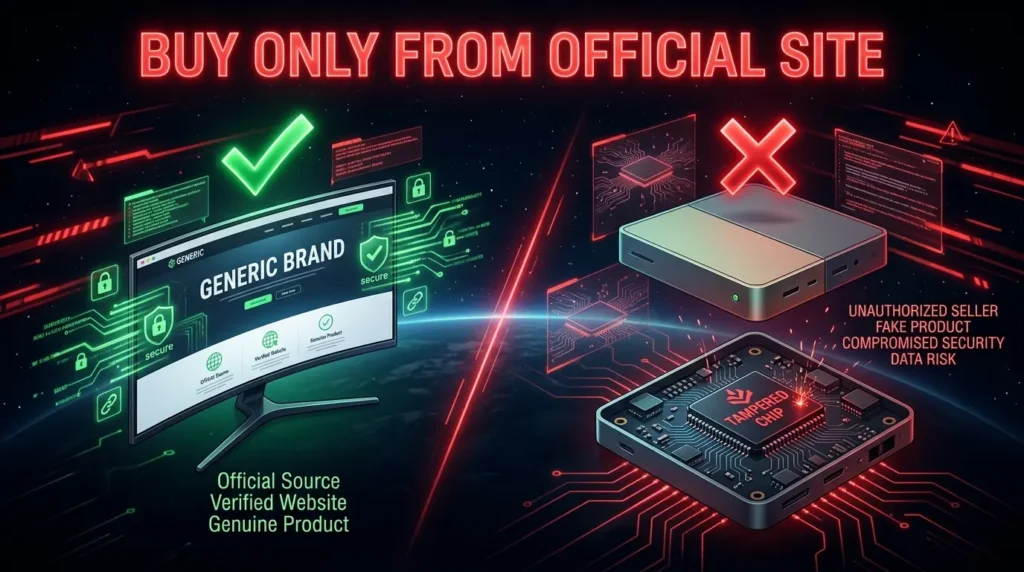
Only purchase Ledger devices from:
- Ledger’s official website: ledger.com
- Authorized resellers listed on Ledger’s website
Never buy from:
- Amazon third-party marketplace sellers
- eBay
- Social media listings
- Any non-official reseller
Counterfeit and pre-compromised Ledger devices have been documented. A device purchased from an unofficial source may have been tampered with to steal your seed phrase during setup.
Key Specifications at a Glance
Nano S Plus: $79 | USB-C | EAL5+ | No Bluetooth | Best for beginners
Nano X: $149 | USB-C + Bluetooth | EAL5+ | Mobile-friendly | Good for travelers
Nano Gen5: $179 | USB-C + Bluetooth + NFC | EAL6+ | Touchscreen | Best value 2026
Flex: $249 | USB-C + Bluetooth + NFC | EAL6+ | Large touchscreen + steel | Best for DeFi
Stax: $399 | USB-C + Bluetooth + NFC + Qi | EAL6+ | Curved screen | Premium flagship
The Verdict: Which Ledger Should You Buy?
First hardware wallet, keeping it simple: Nano S Plus ($79) — all the security, none of the complexity
Mobile user who checks portfolio on the go: Nano X ($149) — Bluetooth makes it practical
Best all-round choice in 2026: Nano Gen5 ($179) — touchscreen, EAL6+, best value
Daily DeFi user signing multiple transactions: Flex ($249) — larger screen worth the premium
Premium buyer who wants the best of everything: Stax ($399) — nothing matches it for experience
For most readers of this guide — serious crypto holders who want reliable cold storage without complexity — the Nano Gen5 at $179 is the recommendation. It delivers Ledger’s latest security generation and a genuinely comfortable touchscreen experience at a reasonable price.
Buy directly from ledger.com. Set it up carefully. Store your seed phrase offline. 🔐
Disclaimer: This review is for informational purposes only and does not constitute financial advice. TheHashmark.com may receive a commission if you purchase through affiliate links, at no additional cost to you. All opinions are our own based on available information.