Picture a messaging app used by nearly a billion people — roughly one in eight humans on Earth. Now imagine that app had its own built-in blockchain, its own wallet, its own payment system, and its own cryptocurrency. No exchange accounts required, no browser extensions, no confusing seed phrases. Just open a chat and send money like sending a text.
That’s the vision behind Toncoin (TON) and The Open Network — and it’s the reason this project keeps showing up on “cryptos to watch” lists despite trading 84% below its all-time high.
The story of how TON got here is also one of crypto’s most dramatic: a $1.7 billion fundraise, an SEC lawsuit, a complete abandonment, a community resurrection, and a full-circle return. Let’s walk through it.
The Quick Answer: What Is Toncoin?
Toncoin (TON) is the native cryptocurrency of The Open Network (TON) — a decentralized Layer-1 blockchain designed specifically for speed, low fees, and integration with Telegram Messenger.
TON is used to pay transaction fees, run smart contracts, stake for validator rewards, pay for Telegram Premium subscriptions, and power thousands of decentralized apps (dApps) within the Telegram Mini Apps ecosystem.
The network is built around a revolutionary architecture called infinite sharding — a system where the blockchain automatically splits into multiple parallel chains as traffic grows, enabling theoretical throughput of millions of transactions per second while keeping fees at fractions of a cent.
As of April 2026, TON trades around $1.28–$1.48 and holds approximately the #29 spot on CoinMarketCap, with a market cap of roughly $3.2–$3.6 billion. Approximately 2.47–2.5 billion TON are in circulation out of a maximum supply of 5 billion.
The Most Dramatic Origin Story in Crypto
Act 1 — The Durov Brothers (2017–2018)
The story begins with Pavel Durov and Nikolai Durov — the brothers who built both VK.com (Russia’s largest social network) and Telegram Messenger.
In late 2017, Pavel and Nikolai quietly began developing a blockchain platform they called the Telegram Open Network. Their vision was ambitious: a blockchain that could serve Telegram’s hundreds of millions of users for everyday payments — fast, cheap, and as easy to use as the messaging app itself.
In 2018, Telegram launched what became the second-largest ICO in history, raising an astonishing $1.7 billion from private investors for the project’s native token, called “Gram.” Only EOS ($4 billion) had ever raised more. The project attracted Wall Street investors, Silicon Valley funds, and crypto enthusiasts alike.
Nikolai Durov, the technical genius of the pair (a mathematics PhD holder and legendary programmer), led the development of the actual protocol — building a multi-blockchain architecture so novel that researchers are still studying it today.
Act 2 — The SEC Steps In (2019–2020)
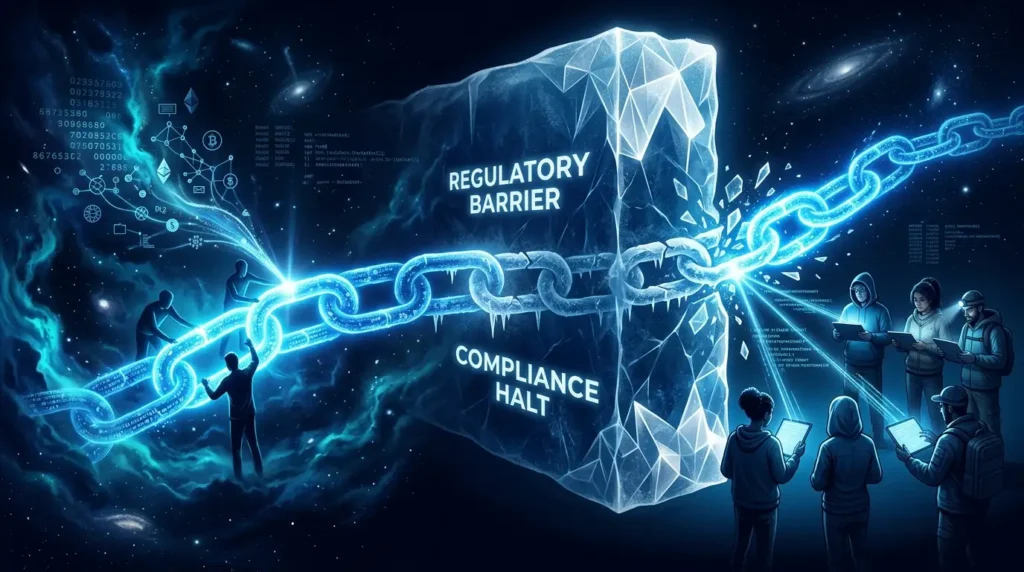
In October 2019, the US Securities and Exchange Commission obtained an emergency injunction in the Southern District of New York, claiming Telegram’s sale of Gram tokens constituted an unregistered securities offering.
The SEC’s position: investors who bought Grams were not buying a utility token, but making an investment expecting profit — which made Gram a security, subject to registration requirements Telegram had never complied with.
Telegram fought back in court. But in June 2020, Pavel Durov announced that Telegram was ending its involvement with the project entirely. The company settled with the SEC for $1.224 billion in refunds to investors plus an $18.5 million civil penalty.
Just like that, a $1.7 billion project with some of the most sophisticated blockchain technology ever built… was abandoned.
Act 3 — The Community Resurrection (2020–2021)
Here’s where the story gets interesting. TON’s code was open-source and publicly available on GitHub. A group of developers — led by Anatoliy Makosov and Kirill Emelianenko — decided to pick up where Telegram left off.
They organized as the TON Foundation (a nonprofit based in Switzerland), took stewardship of the code, renamed the token “Toncoin,” and began building — without any formal connection to Telegram.
In May 2021, the community voted to promote the network from testnet to mainnet. TON was alive again.
Then on December 23, 2021, Pavel Durov made the call that changed everything. He posted:
“When Telegram said goodbye to TON last year, I expressed the hope that future generations of developers would one day carry on with our vision. I was inspired to see the champions of Telegram’s coding contests continue developing the open TON project.”
Durov had given his blessing. The community token had received its creator’s endorsement.
Act 4 — The Full Circle (2023–Present)
In September 2023, Telegram officially adopted TON as its Web3 infrastructure — integrating the TON wallet directly into the app and designating TON as the exclusive blockchain for Telegram Mini Apps.
The circle was complete: the blockchain Telegram built, abandoned, and watched the community revive had come back home — this time on the community’s terms, not Telegram’s.
How Does Toncoin / TON Work?
Infinite Sharding
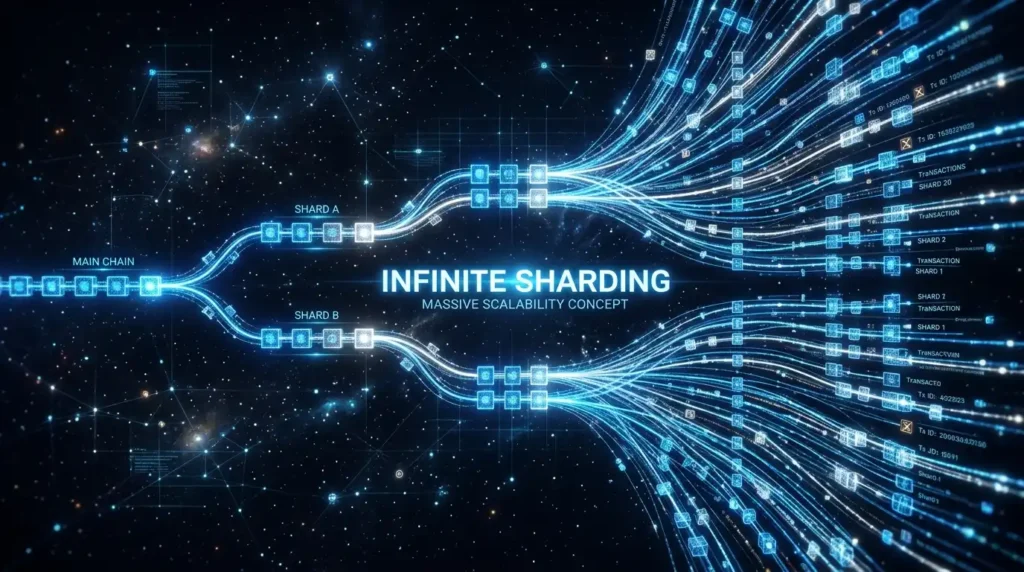
The key technical innovation of TON is its infinite sharding paradigm. Here’s the problem it solves:
Traditional blockchains process one block at a time. As traffic grows, blocks fill up, fees rise, and users wait. Bitcoin handles ~7 transactions per second. Ethereum manages a few hundred. This creates fundamental limitations for a payment network serving hundreds of millions of users.
TON’s solution: the network automatically splits into multiple parallel blockchains (called “shardchains”) as demand increases. Each shard handles a portion of the traffic simultaneously. If one shard gets congested, it splits into two. If two shards are underutilized, they merge. This dynamic splitting and merging happens automatically, without human intervention.
The theoretical ceiling: with enough validator nodes, TON can process millions of transactions per second — a figure that Bitcoin achieves in… several lifetimes.
The Multi-Blockchain Architecture
TON’s structure consists of:
- Masterchain: The main blockchain that coordinates the entire network, records the states of all workchains, and finalizes consensus
- Workchains: Parallel blockchains that can have different rules, tokenomics, and virtual machines (up to 2^32 workchains)
- Shardchains: Each workchain splits into shards based on load (up to 2^60 shardchains per workchain)
Instant Hypercube Routing
Messages between shardchains travel through an algorithm called Instant Hypercube Routing, which finds the most efficient path through the network’s hypercube topology — minimizing latency and avoiding the cross-chain communication delays that plague other multi-chain architectures.
Proof of Stake
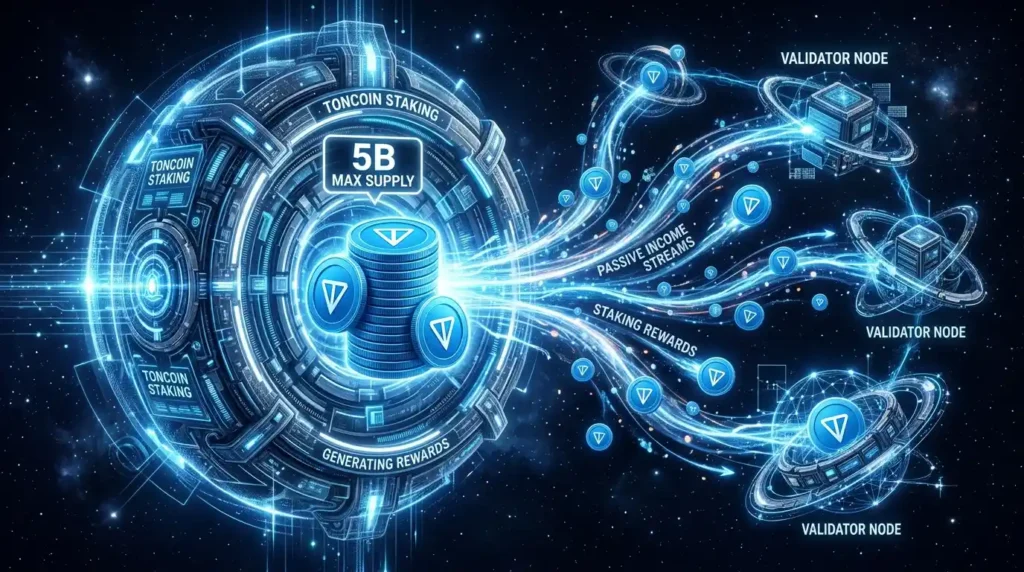
TON uses Proof of Stake consensus. Validators stake TON tokens to participate in block production and earn rewards. The more TON staked, the more secure the network. The ~2% annual inflation rate is designed to compensate validators while keeping long-term supply growth manageable.
The Catchain 2.0 Upgrade (April 2026)
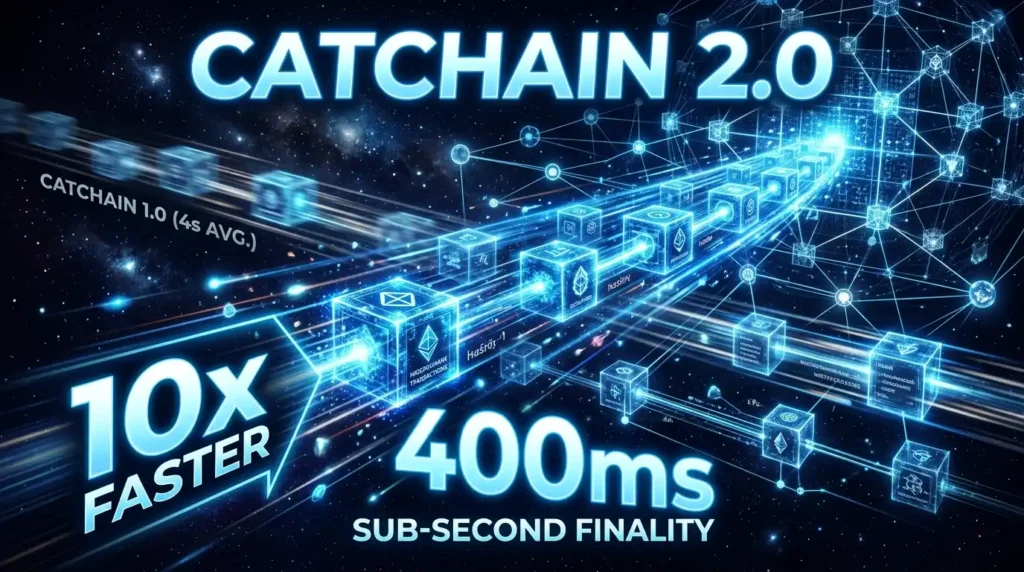
On April 10, 2026, TON activated Catchain 2.0 — a core consensus upgrade that increased block production speed by approximately 6x and reduced block times to 400 milliseconds. Pavel Durov himself announced this as Step 1 of a seven-part “Make TON Great Again” plan. Step 2 targets cutting transaction fees by 6x.
Toncoin Tokenomics: The Numbers
| Metric | Details |
|---|---|
| Current Price (April 2026) | ~$1.28–$1.48 USD |
| Market Cap | ~$3.2–$3.6 billion |
| CoinMarketCap Ranking | ~#29 |
| Circulating Supply | ~2.47–2.5 billion TON |
| Maximum Supply | 5 billion TON |
| Consensus Mechanism | Proof of Stake |
| Block Time | ~400ms (post Catchain 2.0) |
| Transaction Fee | Fractions of a cent |
| All-Time High | ~$8.25 (June 15, 2024) |
| Annual Inflation | ~2% (validator rewards) |
| Mainnet Launch | May 2021 (community) |
Key Tokenomics Details:
TON has a maximum supply of 5 billion tokens. Unlike Bitcoin’s deflationary model, TON uses mild inflation — approximately 2% annually — to reward validators and maintain network security incentives long-term. At this rate, it would take roughly 35 years to double the total supply.
One notable risk: approximately 68% of TON supply is held by large wallets (“whales”), creating concentration risk. Large sell-offs by whale holders have historically caused sharp price declines.
Telegram Integration: The 950 Million User Opportunity
This is TON’s unique value proposition — and what makes it unlike virtually any other blockchain.
Telegram has approximately 950 million monthly active users as of 2026. Not potential users, not theoretical addressable market — active users of the app right now.
Here’s what TON integration means in practice:
Wallet in Telegram: The @wallet bot allows any Telegram user to send, receive, and store TON and USDT (which has a native TON version since April 2024) directly within conversations. No separate app, no exchange account, no wallet setup. Commission-free peer-to-peer transfers to any other Telegram user.
Telegram Premium Payments: Users can pay for Telegram Premium subscriptions using Stars (purchased with TON), directly connecting everyday app usage to on-chain transactions.
Mini Apps Ecosystem: TON is the designated blockchain for Telegram Mini Apps — JavaScript-based in-app experiences that businesses can build directly into Telegram. From games and DeFi to e-commerce and social platforms, Mini Apps let developers reach Telegram’s billion-user audience with crypto-native features. In January 2026, Telegram launched a self-custodial TON wallet for US users, expanding the Mini Apps ecosystem to the American market.
Perpetual Futures: In April 2026, Wallet in Telegram launched leveraged perpetual futures trading (long/short on 50+ assets) directly within the messaging app — bringing institutional-grade financial products to Telegram’s user base.
Ad Revenue Sharing: Telegram channel owners receive 50% of advertising revenue generated on their channels, paid in Toncoin — creating a direct economic incentive for content creators to hold and use TON.
TON Services: Beyond payments, TON powers decentralized storage (TON Storage), a decentralized VPN (TON Proxy), and human-readable blockchain domain names (TON DNS, with 50,000+ .ton domains registered).
TON Price History: A Rollercoaster With a Unique Structure
2021 — Community Launch: TON launched on mainnet in May 2021 at around $0.60–$0.90. Without Telegram’s official backing at this point, growth was gradual.
December 2021 — Durov’s Blessing: Pavel Durov’s endorsement caused an immediate price spike. TON climbed from under $2 to over $5 within weeks.
2022 — The Crypto Winter: Like everything else in crypto, TON fell through the 2022 bear market, bottoming around $1–$1.50.
September 2023 — The Telegram Partnership: When Telegram officially adopted TON as its Web3 infrastructure, the price surged dramatically — from around $1.50 to over $2.50 within days.
2024 — The Bull Run and ATH: TON participated in the 2024 crypto bull market powered by the Bitcoin ETF approval and broader market recovery. It reached its all-time high of approximately $8.25 on June 15, 2024 — driven by the explosive growth of Telegram Mini Apps (particularly the Notcoin game which attracted tens of millions of users) and the launch of native USDT on TON.
2025–2026 — The Correction: After the June 2024 ATH, TON underwent a sharp correction along with the broader market. It has been trading between $1.20–$1.80 through early 2026, approximately 84% below its peak. The April 2026 Catchain 2.0 upgrade caused a brief 15% surge, and Grayscale added TON to its Q2 assets-under-consideration list — signals of ongoing institutional attention.
What Is Toncoin Actually Used For?
Everyday Payments via Telegram: The most accessible use case. Splitting a restaurant bill, paying a freelancer, sending money to family — any of these can be done via Telegram wallet with zero fees between users.
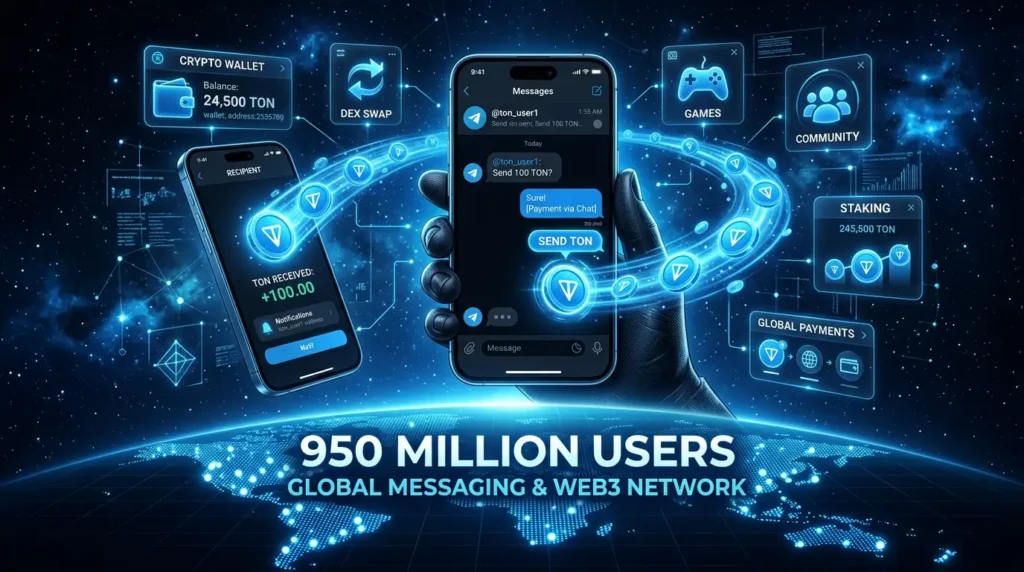
Staking: TON holders can stake their tokens to support validators and earn approximately 4–5% annual staking rewards — a passive income option accessible through the Telegram wallet.
dApp Transactions: Every interaction with the 650+ decentralized applications on TON requires small amounts of TON for gas fees — from DEX trades to NFT purchases to game in-app purchases.
Cross-Chain Bridge: The TON Teleport Bridge (coming mid-2026) will enable Bitcoin cross-chain transfers to the TON ecosystem, dramatically expanding interoperability.
Governance: TON holders can submit and vote on improvement proposals through the on-chain governance platform.
Toncoin Risks: The Honest Assessment
Whale Concentration: With 68%+ of supply in large wallets, TON is vulnerable to coordinated selling. This has contributed to sharp price drops and remains a structural concern.
Telegram Dependency: TON’s biggest competitive advantage — Telegram integration — is also its biggest risk. If Telegram were to pivot away from TON (as it did in 2020), the impact would be severe. The relationship between Telegram and the TON Foundation, while warm, is not contractually exclusive or guaranteed.
No Hard Supply Cap: TON’s ~2% annual inflation is mild, but it differs from Bitcoin’s deflationary model. This means ongoing sell pressure from newly issued tokens, and the unlimited long-term supply ceiling is a point some investors find concerning.
Pavel Durov’s Legal Situation: In August 2024, Pavel Durov was arrested in France on charges related to Telegram’s content moderation practices. While released and the case ongoing, any escalation of his legal situation could negatively impact Telegram and by extension TON’s adoption narrative.
Competition: Ethereum, Solana, and Base all offer competing ecosystems with larger developer communities and DeFi TVL. Converting Telegram users from passive observers to active on-chain participants remains unproven at scale.
How to Buy Toncoin (TON) in the US
TON is more accessible than most altcoins thanks to its availability on major US exchanges.
Step 1 — Choose an Exchange
TON is available on Coinbase, Kraken, and OKX. Coinbase is the most beginner-friendly for US users.
Step 2 — Create and Verify Your Account
Sign up, complete identity verification, and enable two-factor authentication. Takes 5–15 minutes.
Step 3 — Add Funds
Link your bank account for free ACH transfers (1–3 business days) or use a debit card for instant purchases (1.5–3.5% fee).
Step 4 — Buy TON
Search for “Toncoin” or “TON,” enter your dollar amount, and confirm. Fractional purchases available.
Step 5 — Easiest Option: Telegram Wallet
If you use Telegram, the simplest path is to buy TON directly through the @wallet bot inside Telegram. You can fund it via card or bank transfer and immediately use it to pay other Telegram users or explore Mini Apps.
Step 6 — Staking
To earn staking rewards, you can stake directly through the Telegram wallet (March 2025 wallet upgrade added staking to the app) or through dApps like TON Whales.
Step 7 — Track for Taxes
Every TON sale or exchange is a taxable event in the US. Use CoinTracker or Koinly for accurate records.
Key Toncoin / TON Terminology for Beginners
The Open Network (TON): The decentralized Layer-1 blockchain, originally developed by Telegram’s founders and now maintained by the independent TON Foundation.
Toncoin (TON): The native cryptocurrency of The Open Network, used for fees, staking, and payments.
Infinite Sharding: TON’s architecture where the blockchain automatically splits into parallel chains as traffic grows, enabling massive throughput without congestion.
Shardchains: Parallel sub-blockchains that each process a portion of network transactions simultaneously.
Masterchain: The primary TON blockchain that records the state of all shardchains and coordinates consensus.
Hypercube Routing: TON’s algorithm for efficient message passing between shardchains, minimizing cross-chain latency.
Mini Apps: JavaScript-based applications built inside Telegram that can interact with the TON blockchain — from games and DeFi to commerce and social platforms.
TON Wallet (@wallet): The Telegram bot that enables any user to hold, send, and receive TON and USDT directly within Telegram conversations.
Catchain 2.0: The April 2026 consensus upgrade that increased TON’s block speed by ~6x and achieved sub-second transaction finality.
TON Foundation: The Switzerland-based nonprofit that governs and develops The Open Network independently from Telegram.
Should You Buy Toncoin (TON) in 2026?
Few cryptocurrencies have a more compelling user distribution argument — and few have a more concentrated supply risk.
The bull case: Access to 950 million Telegram users through a native wallet is unprecedented in crypto. No other blockchain has this distribution advantage. The Catchain 2.0 upgrade delivers genuine technical progress. The “Make TON Great Again” roadmap has 6 more steps. Grayscale is reviewing it for institutional products. At 84% below its ATH, the discount from peak is substantial. If even 5% of Telegram users engage meaningfully with TON, it becomes one of the largest active crypto user bases in existence.
The bear case: Converting passive Telegram users to active on-chain participants is a different and harder challenge than having them on the platform. Whale concentration is real and has triggered sharp drops. The relationship with Telegram, while warm, is informal. And the broader market has been unkind to Layer-1 altcoins in 2025–2026.
The honest bottom line: TON is the most compelling “mass adoption” thesis in crypto based on distribution alone. Whether that thesis converts to price is a function of execution, market conditions, and whether Telegram’s user base actually wants to use crypto. If you believe in that conversion — and the roadmap suggests Telegram is committed to making it happen — TON deserves serious consideration. If you’re skeptical of converting passive messaging app users into active on-chain participants, the risks are real.
Telegram is the door. TON is the blockchain behind it. 950 million people already have the key. 📱
Disclaimer: This article is for informational purposes only and does not constitute financial advice. Cryptocurrency investments carry significant risk, including the potential loss of all invested capital. Always conduct your own research before making any investment decisions.