Founded: 2012
Headquarters: San Francisco, CA, USA
Listed: NASDAQ (COIN)
Supported assets: 250+ cryptocurrencies
Users: 105+ million registered, ~10.8 million monthly active
Regulated: Yes — BitLicense (NY), MSB registration across US states
Coinbase is the largest cryptocurrency exchange in the United States and one of the most recognized crypto brands globally. Founded in 2012 with a mission to “make crypto easy to use,” it has grown from a simple Bitcoin broker into a comprehensive platform covering spot trading, staking, a self-custody wallet, a Layer 2 blockchain (Base), institutional services, and — as of 2026 — traditional stock trading.
This review covers what Coinbase offers in 2026, its fee structure, security practices, and who the platform is best suited for.
Who Is Coinbase For?
Before diving into details, the clearest framing:
Coinbase is best for:
- Beginners buying cryptocurrency for the first time
- US-based investors who prioritize regulatory compliance
- Anyone who values simplicity and a polished user experience
- Long-term holders who don’t trade frequently
- Users who want an ecosystem that covers trading, staking, a self-custody wallet, and educational resources in one place
Coinbase may not be ideal for:
- Cost-conscious active traders who prioritize the lowest possible fees
- Users seeking the widest selection of obscure altcoins
- Those who want no-KYC trading
- Advanced derivatives traders seeking complex instruments
Platform Overview
Simple Trade vs Advanced Trade
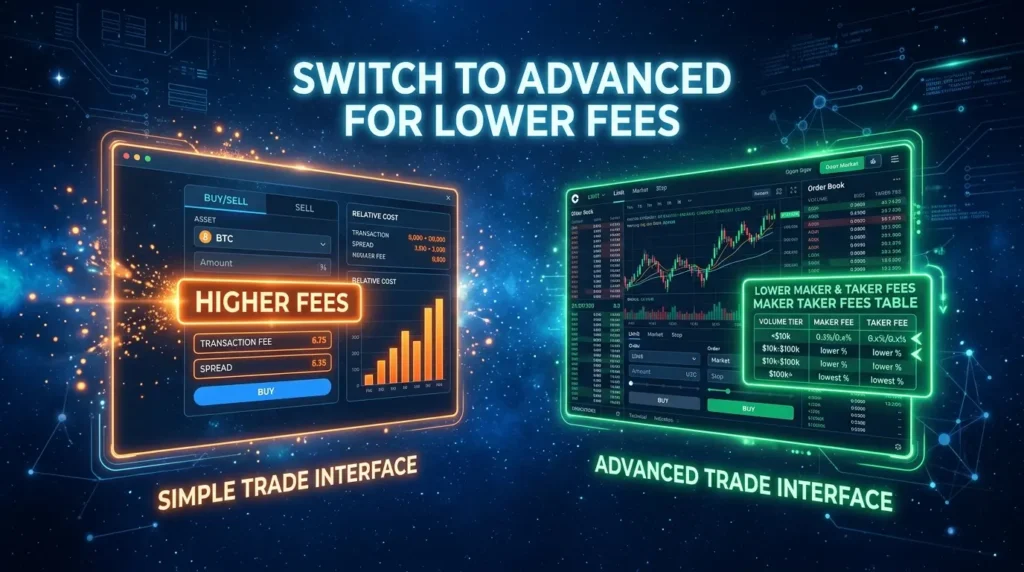
Coinbase offers two distinct trading interfaces within the same account:
Simple Trade (default): Designed for beginners. Clean, minimal interface. You select an asset, enter an amount, choose a payment method, and confirm. No charts, no order types, no complexity. Ideal for first-time buyers.
Coinbase Advanced Trade: A full trading interface with order books, candlestick charts, and multiple order types (market, limit, stop-limit). Significantly lower fees than the simple interface. Users can toggle between Simple and Advanced without opening a separate account — the transition is seamless.
The important note: the fee difference between simple and advanced is substantial. Active traders benefit from switching to Advanced Trade as soon as they’re comfortable.
Coinbase One Subscription
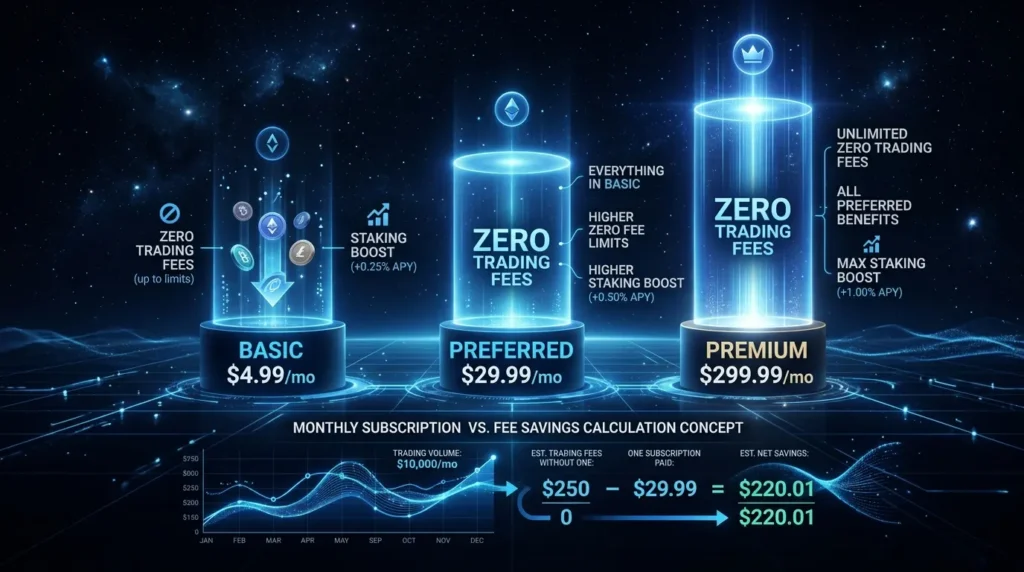
Coinbase offers a subscription plan called Coinbase One with three tiers:
- Basic: $4.99/month — zero trading fees on up to $500 in monthly trades, 5% staking reward boost
- Preferred: $29.99/month — zero trading fees on up to $10,000 in monthly trades, 10% staking boost, priority support
- Premium: $299.99/month — zero trading fees on up to $100,000 in monthly trades, 15% staking boost, priority support
For users who trade regularly, the monthly subscription can pay for itself quickly by eliminating per-transaction fees.
Other Features
Staking: Coinbase supports staking for Ethereum, Solana, Cardano, and other proof-of-stake assets directly through the platform. Rewards are distributed to your account automatically.
Coinbase Wallet: A separate, self-custody wallet application. Unlike your Coinbase exchange account (custodial), Coinbase Wallet gives you full control of your private keys and access to DeFi protocols and Web3 applications. Available as a browser extension and mobile app.
Learn and Earn: Coinbase offers short educational videos about various cryptocurrencies. Completing courses earns users small amounts of the featured crypto — a low-stakes way to learn while accumulating small positions.
Stock Trading (2026 addition): As of early 2026, US Coinbase users can trade stocks and ETFs with zero commission, 24/5 access, and fractional shares starting at $1 — all within the same Coinbase account.
Base Network: Coinbase operates Base, an Ethereum Layer 2 blockchain. Users can bridge assets to Base for lower-cost DeFi transactions.
Fees
Coinbase’s fee structure varies significantly depending on how you trade.
Simple Trade Fees
The standard interface uses a spread-based model plus a convenience fee. The total cost is typically displayed just before you confirm a trade. Fees in this mode can range from approximately 1.5% to 4% depending on payment method and trade size — among the higher costs in the industry for this type of interface.
Payment method fees:
- ACH bank transfer: Generally free for deposits; spread applies on trades
- Debit card: ~3.99% convenience fee
- Wire transfer: $10 deposit fee, $25 withdrawal fee (US)
Advanced Trade Fees
Coinbase Advanced uses a maker-taker fee model that scales with 30-day trading volume:
| 30-Day Volume | Maker Fee | Taker Fee |
|---|---|---|
| $0–$10,000 | 0.40% | 0.60% |
| $10,000–$50,000 | 0.25% | 0.40% |
| $50,000–$100,000 | 0.15% | 0.25% |
| $100,000–$1M | 0.08% | 0.18% |
| $1M+ | 0.00% | 0.05% |
For most retail users, the 0.40%/0.60% maker/taker rates on Advanced Trade are competitive with other major exchanges — and a significant improvement over the Simple Trade interface.
The Key Takeaway on Fees
Coinbase charges more than many competitors on its default interface. However, Advanced Trade fees are reasonable, and Coinbase One subscription eliminates fees within volume limits. The overall cost depends heavily on how you use the platform.
Supported Assets
Coinbase supports 250+ cryptocurrencies in 2026, including all major assets:
- Bitcoin (BTC), Ethereum (ETH), Solana (SOL), XRP, Cardano (ADA), Litecoin (LTC), Chainlink (LINK), Dogecoin (DOGE), Shiba Inu (SHIB), Avalanche (AVAX), and hundreds of others
Coinbase curates its listings through a review process covering legal, compliance, technical security, and market considerations. This means fewer total tokens than some global competitors, but generally higher confidence that listed assets have met a basic standards threshold.
Fiat currencies supported: USD, EUR, GBP, and others depending on region.
Security
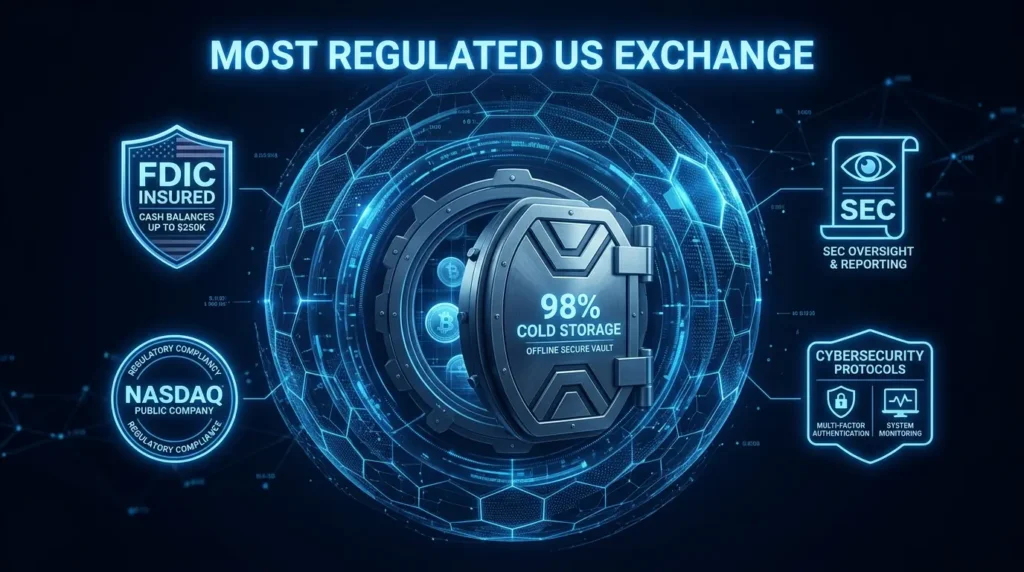
Coinbase’s security practices are among the strongest of any major exchange:
Cold storage: Approximately 98% of customer crypto assets are held offline in cold storage — disconnected from internet-connected systems and significantly more difficult to compromise remotely.
Crime insurance: Coinbase maintains crime insurance that may cover losses resulting from a security breach of Coinbase’s own systems. This coverage does not apply to individual account compromises caused by phishing, weak passwords, or shared credentials.
FDIC insurance on USD: USD balances held in Coinbase accounts are eligible for FDIC pass-through insurance up to $250,000 per user. This applies to fiat cash, not crypto.
Account security options: Two-factor authentication (authenticator app or hardware key), biometric login on mobile, and security key support.
Regulatory compliance: As a publicly traded company subject to SEC oversight, Coinbase operates under substantially more regulatory transparency than most offshore exchanges. It publishes regular financial disclosures and maintains audited financial statements.
Important distinction: Coinbase’s insurance and security apply to Coinbase’s own custody and systems. Individual account security — protecting against phishing, SIM swap, or compromised passwords — remains the user’s responsibility. Enable 2FA and use a strong, unique password.
Regulation and Compliance
Coinbase is one of the most regulated cryptocurrency exchanges available to US users:
- NASDAQ-listed public company (ticker: COIN) — subject to SEC reporting requirements
- BitLicense holder in New York — one of the most stringent state crypto licenses
- MSB registration with FinCEN
- State money transmitter licenses in most US states
This regulatory footprint means Coinbase operates with greater accountability and transparency than many alternatives. It also means mandatory KYC (identity verification) for all users and compliance with AML (anti-money laundering) requirements.
Mobile App
Coinbase’s mobile app is available for iOS and Android and is consistently rated highly in both app stores. The app covers the full feature set: trading, portfolio tracking, staking, educational content, and access to Coinbase Wallet. The interface is clean, intuitive, and performs reliably.
Customer Support
Coinbase offers several support channels:
- Extensive Help Center with articles covering most common questions
- Live chat support (availability varies)
- Email-based support for account issues
- Phone support for account lockouts and suspected compromises
Response times for complex issues can vary, particularly during periods of high market activity. This is a common challenge across most major exchanges.
What’s New in 2026
Stock and ETF trading: US users can now trade traditional securities within Coinbase — zero commission, 24/5, fractional shares from $1.
Deribit acquisition: Coinbase acquired Deribit, a major crypto derivatives exchange, expanding its derivatives offering significantly for institutional and advanced users.
Base ecosystem growth: Coinbase’s Layer 2 Base network has grown substantially, with increasing DeFi activity and lower-cost on-chain transactions for Coinbase Wallet users.
Pros and Cons
Pros:
- Largest US-based exchange — strong regulatory standing and transparency
- Beginner-friendly interface — simple onboarding from fiat to crypto
- Strong security practices — cold storage, insurance, biometric login
- Coinbase Advanced Trade — competitive fees for active traders
- Full ecosystem — trading, staking, self-custody wallet, DeFi access, Learn and Earn
- FDIC insurance on USD balances
- Publicly traded company — financial transparency
Cons:
- Higher fees on the standard Simple Trade interface compared to some competitors
- Fee structure can be opaque — full cost only visible at confirmation
- Smaller total token selection than some global exchanges
- KYC required — not suitable for privacy-focused users
- Customer support can be slow during peak periods
How to Get Started on Coinbase
- Visit coinbase.com and click “Get started”
- Enter your email address and create a strong password
- Verify your email address
- Complete identity verification (government-issued ID required)
- Link a payment method — bank account (ACH, recommended for lower fees) or debit card
- Enable two-factor authentication (authenticator app recommended over SMS)
- Make your first purchase — or switch to Advanced Trade for lower fees
Minimum trade: $1
The Verdict
Coinbase earns its reputation as the default starting point for US crypto investors. Its combination of regulatory compliance, security standards, user-friendly design, and broad ecosystem makes it one of the most trustworthy on-ramps to crypto in 2026.
The primary trade-off is cost on the standard interface — active traders will find better fee structures elsewhere or should use Coinbase Advanced. For beginners, long-term holders, and compliance-conscious investors, Coinbase remains a strong choice.
Best for: First-time buyers, US investors prioritizing regulation, long-term holders, users who want one platform covering trading, staking, and a self-custody wallet.
Disclaimer: This review is for informational purposes only and does not constitute financial advice. Cryptocurrency investments carry significant risk, including the potential loss of all invested capital. TheHashmark.com may receive a commission if you sign up through affiliate links, at no additional cost to you. Always conduct your own research before making any investment decisions.