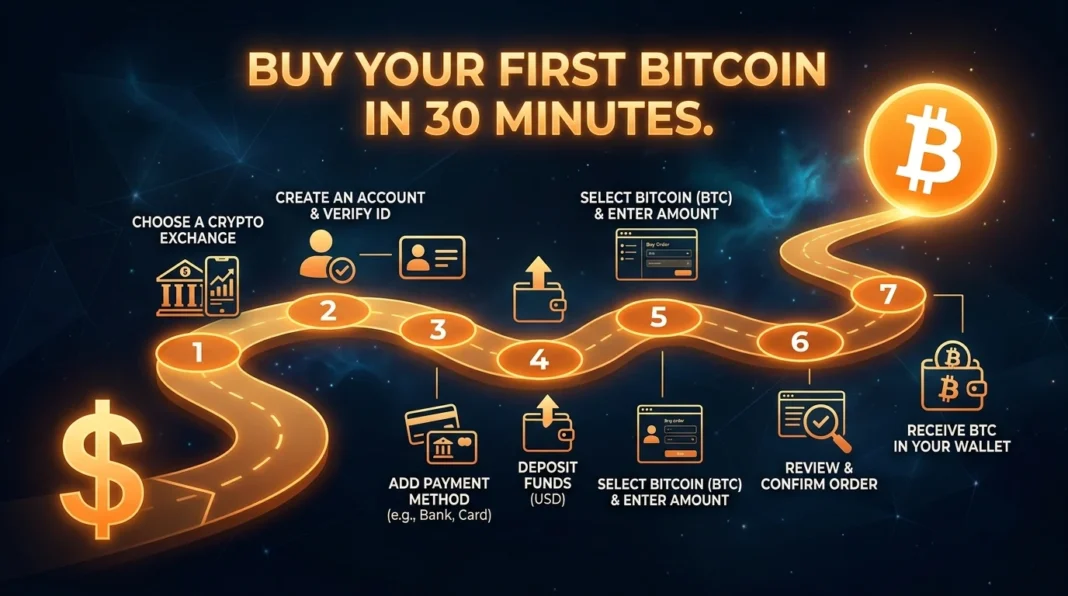
Cryptocurrency is one of the more unusual gift ideas — it’s an asset, not just a token gesture. A $100 Bitcoin gift in 2015 would be worth considerably more today. Whether that’s a selling point or a caveat depends on how you frame it.
Gifting crypto in 2026 is easier than it’s ever been, with several options ranging from beginner-friendly to more hands-on. This guide covers the five best methods, how to choose the right one for your recipient, and what to know about security and taxes.
Before You Gift: 3 Questions to Ask
1. Is the recipient already in crypto?
If yes — they likely have a wallet address and know how to receive. A direct transfer is simplest.
If no — they’ll need onboarding. Choose a method that includes some education.
2. How comfortable are they with technology?
A hardware wallet gift is meaningful but requires setup. A crypto gift card is much simpler for a non-technical recipient.
3. What’s the purpose?
Introducing someone to crypto → gift card or exchange transfer on a beginner platform
Long-term investment → hardware wallet loaded with Bitcoin or Ethereum
Holiday or birthday surprise → crypto voucher or gift card
Method 1: Hardware Wallet + Crypto (Best Gift for Serious Investors)

A hardware wallet pre-loaded with Bitcoin or Ethereum is the most meaningful crypto gift — it comes with both the asset and a secure way to store it long-term.
What you need:
- A hardware wallet (Ledger Nano X, Trezor Model T, or similar)
- A small amount of Bitcoin or Ethereum to load onto it
How to do it:
- Purchase the hardware wallet from the manufacturer’s official website only — never from third parties or second-hand marketplaces (tamper risk)
- Set up the device following the manufacturer’s instructions
- Write down the seed phrase on paper — this is critical
- Buy BTC or ETH on your exchange of choice
- Transfer the crypto to the hardware wallet address
- Gift the wallet along with the seed phrase stored safely (in a sealed envelope)
- Include a brief note explaining what the seed phrase is and why it must never be photographed or shared
Critical warning: Never purchase a hardware wallet that has been opened or has a pre-written seed phrase included in the box. Legitimate hardware wallets generate the seed phrase during setup — any device with a “pre-configured” seed is a potential theft device.
Best for: Someone who is already interested in crypto or willing to learn. The gift requires some setup from the recipient.
Cost: Ledger Nano X ~$150, Trezor Model T ~$180 — plus the crypto loaded onto it.
Method 2: Direct Exchange Transfer (Simplest for Existing Crypto Users)
If the recipient already has a Coinbase, Kraken, or other exchange account, simply ask for their wallet address and send directly.
How to do it:
- Ask the recipient for their Bitcoin or Ethereum wallet address (or exchange deposit address)
- Log into your exchange account
- Go to Send / Withdraw
- Select the cryptocurrency
- Enter their address and the amount
- Double-check the address character by character
- Confirm
For Coinbase users: Coinbase allows free instant transfers between Coinbase accounts using just an email address or phone number — no wallet address needed.
Best for: Recipients who are already using crypto and know how to manage a wallet or exchange account.
Cost: Exchange withdrawal fee (typically $1–5 for Bitcoin) + the crypto amount.
Method 3: Crypto Gift Cards (Most Beginner-Friendly)
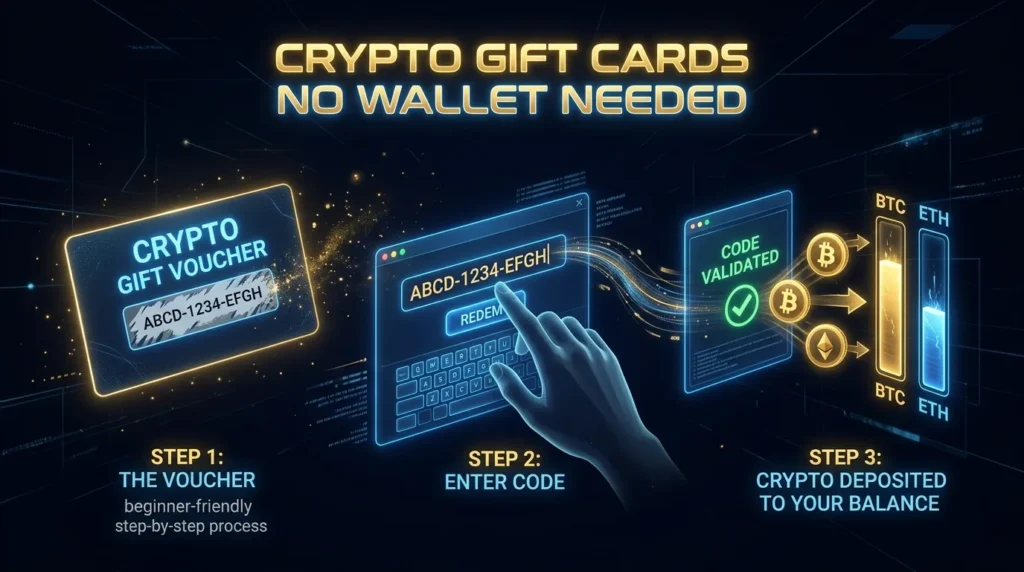
Crypto gift cards work similarly to regular gift cards — the recipient receives a code they can redeem for a specific cryptocurrency, directly to their wallet.
Major platforms:
- Crypto Voucher (cryptovoucher.io): Buy a voucher in amounts from $10–$200, recipient redeems for BTC, ETH, or other supported coins. Widely available.
- Binance Gift Card: Load any supported cryptocurrency. Recipient redeems through the Binance app. No Binance account required to receive.
- Coinbase Gift Card: Available in select regions. Recipients without an account are guided through setup.
How it works:
- Choose a platform and amount
- Purchase with your credit card, debit card, or bank transfer
- You receive a gift code (digital or printable)
- Gift the code to the recipient
- They visit the platform, enter the code, choose their coin, provide a wallet address, and receive crypto
Fees: Typically 2–5% service fee depending on platform and amount. Verify fees before purchasing.
Best for: Beginners who don’t have a crypto wallet yet. The redemption process walks them through getting started.
Note: Stick to well-known, established platforms for gift cards. Gift card scams exist — never purchase crypto gift cards from unknown third-party sellers.
Method 4: Send via P2P Apps (Cash App, PayPal)
For recipients who already use Cash App or PayPal, sending crypto is as easy as sending money.
Cash App: Supports Bitcoin. Send BTC directly to another Cash App user’s $Cashtag or Bitcoin address. Simple, instant, no fees between Cash App users for small amounts.
PayPal: Supports Bitcoin, Ethereum, Litecoin, and others. Send crypto to another PayPal user directly through the app.
How to do it:
- Open Cash App or PayPal
- Navigate to the crypto section
- Choose Send
- Enter recipient’s username/address or phone number
- Specify amount and confirm
Limitations: Recipient’s crypto remains within the app’s custodial system by default — they may not be able to withdraw to an external wallet without additional steps (varies by platform and region).
Best for: Casual gifts to people who already use these apps and aren’t focused on self-custody.
Method 5: Set Up an Exchange Account for Them (Most Hands-On)
For someone completely new to crypto with no accounts anywhere, you can set up the initial exchange account on their behalf (with their consent) and make the first purchase.
Approach:
- Help them create a Coinbase or Kraken account on their device
- Complete KYC using their own ID (this must be their own information — not yours)
- Enable 2FA on their account
- Make the initial purchase as a gift
- Walk them through how to view their balance and what DCA means for future purchases
Important: The account must be in the recipient’s name with their own identity documents. Do not create an account in your name for someone else — this violates exchange terms of service.
Best for: A family member or close friend you’re comfortable guiding through the setup process together.
Choosing the Right Method for Your Recipient
| Recipient Type | Best Method |
|---|---|
| Already uses crypto | Direct exchange transfer |
| Interested but no account yet | Crypto gift card or hardware wallet |
| Wants long-term storage | Hardware wallet + crypto |
| Uses Cash App or PayPal | P2P app transfer |
| Total beginner, needs help | Set up exchange account together |
Tax Considerations When Gifting Crypto (US)

Gifting cryptocurrency has specific tax implications in the US. This is general information — consult a tax professional for your specific situation.
For the giver:
- Gifting crypto is generally not a taxable event for the giver (no capital gains triggered by the act of giving)
- However, if you sell crypto to fund a cash gift and buy crypto to give, the sale is a taxable event
- Annual gift tax exclusion for 2026: $18,000 per recipient per year. Gifts below this threshold typically don’t require a gift tax return
- Gifts above $18,000 may require filing Form 709 (gift tax return) — not necessarily paying tax, but filing
For the recipient:
- Receiving crypto as a gift is generally not taxable at time of receipt
- When the recipient eventually sells, they pay capital gains tax on the appreciation
- Their cost basis is typically the fair market value on the date you gifted it (or your original cost basis in some cases — this gets complex)
- Keep records: date of gift, fair market value at time of gift, your original cost basis
Note: Tax rules around crypto are complex and evolving. For significant gifts, consulting a tax professional familiar with cryptocurrency is advisable.
Security Tips for Crypto Gifts
For hardware wallet gifts:
- Only purchase from the manufacturer’s official website
- Never use a pre-configured hardware wallet — the recipient should generate the seed phrase themselves
- Deliver the seed phrase in a sealed, tamper-evident envelope
- Include instructions emphasizing: the seed phrase must never be photographed, stored digitally, or shared
For gift card gifts:
- Use established platforms only
- Verify the card works before gifting (check balance if possible)
- Never purchase from unknown sellers claiming to sell “crypto gift cards” on marketplaces — high scam risk
For exchange transfers:
- Triple-check the recipient’s address before confirming
- Send a small test amount first if gifting a significant sum
- Blockchain transactions are irreversible
Key Terminology
Hardware wallet: A physical device that stores Bitcoin’s private keys offline — the safest long-term storage option.
Seed phrase: 12 or 24 words that can restore a wallet — must be stored physically offline and never shared.
Crypto voucher: A redeemable code representing a specific dollar value of cryptocurrency.
Gift tax exclusion: The amount you can give to one person per year without filing a gift tax return (~$18,000 in 2026 for US taxpayers).
Cost basis: The original price at which an asset was acquired — used to calculate capital gains when sold.
The Bottom Line
Crypto is a thoughtful gift for the right person — someone interested in finance, technology, or long-term investing. The best method depends entirely on the recipient’s experience level.
Quick guide:
- Tech-savvy, already in crypto → direct transfer
- Curious beginner → gift card (no setup required on your part)
- Long-term minded → hardware wallet loaded with Bitcoin
- Casual user of PayPal/Cash App → send through the app
Whatever method you choose: document the gift value and date for tax purposes, prioritize security, and include some education if the recipient is new to crypto. The asset is only as valuable as their ability to safely access and manage it. 🎁
Disclaimer: This article is for informational purposes only and does not constitute financial or tax advice. Cryptocurrency investments carry significant risk. Tax rules vary by jurisdiction and individual circumstances. Always consult a qualified tax professional for your specific situation. TheHashmark.com may receive a commission if you purchase through affiliate links, at no additional cost to you.