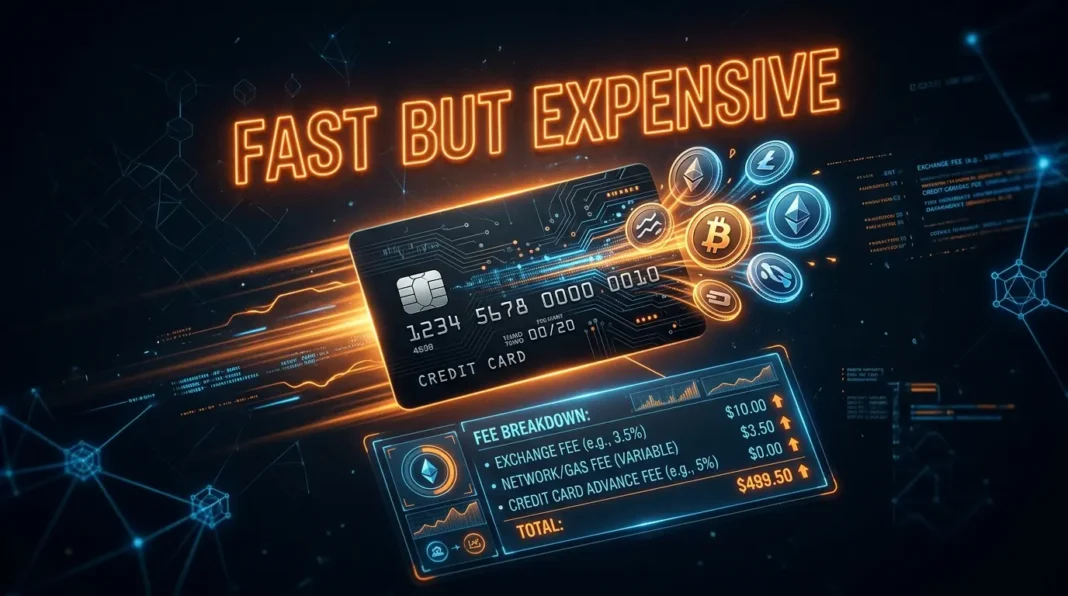
If you’re under 18 and interested in cryptocurrency, you’ve probably run into the same wall: every major exchange requires you to be 18 or older to open an account.
This isn’t arbitrary. It exists because regulated exchanges must comply with Know Your Customer (KYC) laws — and minors generally can’t enter binding financial contracts independently.
But there are legitimate, legal paths to getting started with crypto before you turn 18. This guide covers the options clearly, along with what to know about safety, taxes, and making the most of the learning opportunity.
The Legal Landscape: What Minors Can and Can’t Do
Generally allowed at any age:
- Owning cryptocurrency (no minimum age to hold crypto in a wallet)
- Receiving crypto as a gift
- Earning crypto through work, airdrops, or play-to-earn games
- Using a non-custodial wallet to store crypto
Requires being 18+:
- Opening an account on any regulated exchange (Coinbase, Kraken, Binance)
- Completing KYC identity verification
- Entering into exchange terms of service agreements
The key distinction: Owning Bitcoin isn’t illegal for minors. Signing up for Coinbase is.
No federal law in the US prohibits minors from owning cryptocurrency. The age restriction is a platform-level requirement driven by financial regulations.
A note on workarounds: Some teens consider creating accounts using a parent’s identity or false information. This violates exchange terms of service, can result in account closure and frozen funds, and exposes the family to regulatory risk. Legitimate paths exist — use them.
Path 1: Parent Opens a Custodial Account (Best Option)
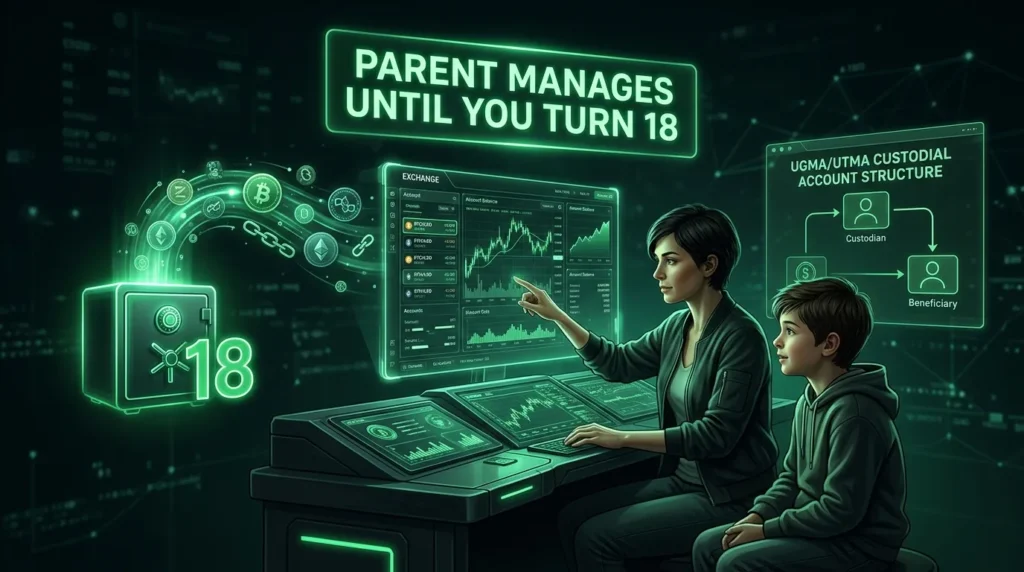
The most legitimate and structured approach is a parent or guardian managing crypto on your behalf.
How it works:
- Parent creates a Coinbase or Kraken account in their own name
- Parent buys Bitcoin or Ethereum as a savings vehicle for the child
- Assets are tracked and documented
- When the child turns 18, assets are transferred
UGMA/UTMA accounts: These custodial investment accounts let a parent hold assets in the child’s name. The assets legally belong to the child, but the adult controls them until the child reaches 18 or 21 (depending on state).
Most major crypto exchanges don’t directly offer UGMA/UTMA accounts for crypto — but parents can purchase crypto in their own account and earmark it for their child, storing it on a hardware wallet for safekeeping until transfer.
The benefit: Full legal compliance, full exchange features, and parental oversight while the minor learns.
Path 2: Receive Crypto as a Gift
Anyone can receive cryptocurrency at any age — a wallet address has no age verification. A parent, grandparent, or family member can:
- Buy Bitcoin or Ethereum on their exchange
- Transfer it to a wallet you control
- You own and hold it in your own wallet
How to receive:
- Download a non-custodial wallet app (Trust Wallet, Coinbase Wallet)
- Generate a receive address
- Share it with the gifter
You own the crypto. You can’t sell it on a regulated exchange until 18 — but you can hold it, watch it, and learn.
Path 3: Earn Crypto
Freelance work paid in crypto: Doing online work (writing, design, coding) and accepting crypto payment is possible at any age, though a parent may need involvement depending on jurisdiction and work type.
Play-to-earn games: Some blockchain games reward players with tokens. Most are speculative — treat any earnings as educational rather than significant investment.
Bitcoin ATM: Many machines allow small purchases below their verification threshold without government ID. Fees are high (6–20%), and a parent accompanying you is advisable. Best suited for a one-time educational experience rather than a savings strategy.
Getting the Most Out of Crypto Before 18

Being under 18 and interested in crypto is actually an advantage — you have time on your side.
What to do while waiting:
- Learn deeply: Understand how blockchain works, what wallets and private keys are, how DeFi works
- Track a hypothetical portfolio: Practice before real money
- Understand taxes: Know how capital gains work before managing real positions
- Set up a wallet: Holding a small amount of gifted crypto teaches you how wallets work
Anyone who started DCA-ing $50/month into Bitcoin at 15 and continued until 25 had a decade of accumulation through multiple market cycles. Starting early — even with very small amounts — compounds significantly.
Safety: Crypto Risks for Young Investors
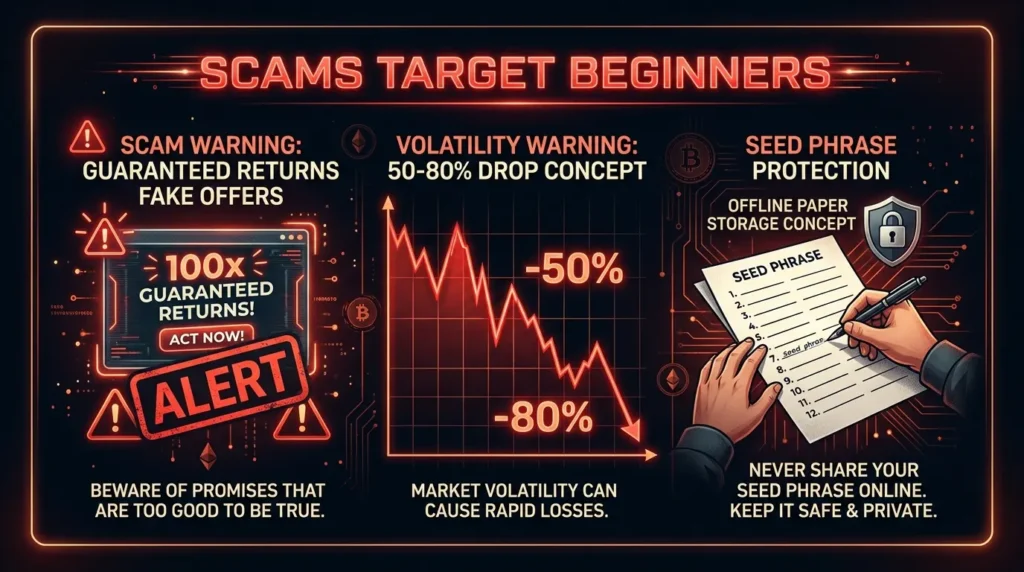
Scams target beginners: “Guaranteed returns” and “double your crypto” offers are always scams. If someone online offers to invest your crypto for you, they’re stealing from you.
Volatility is real: Bitcoin has historically dropped 50–80% from its highs. Only invest amounts you’re prepared to see decline significantly.
Private keys are your responsibility: If you lose your seed phrase and your device breaks, your crypto is gone permanently. Write it on paper, store it safely, never photograph it.
Don’t broadcast your holdings: Don’t tell people online how much crypto you hold.
Taxes: What Minors and Parents Need to Know (US)
Even under 18, the IRS doesn’t waive crypto taxes.
The “Kiddie Tax”: If a minor earns more than approximately $2,600 in unearned income (including crypto gains) per year, that income may be taxed at the parent’s marginal rate.
Taxable events: Selling crypto for profit, trading one crypto for another, and spending crypto on purchases are all taxable events regardless of age.
Record keeping: Keep records of acquisition date and price — tax authorities see transactions regardless of the holder’s age.
For significant crypto holdings in a minor’s name, consulting a tax professional familiar with cryptocurrency is advisable.
For Parents: Using Crypto as a Financial Education Tool
Involving children in crypto decisions builds financial literacy directly applicable to adult life.
What it can teach:
- How markets work (supply and demand, price discovery)
- The importance of long-term thinking vs. emotional reactions
- What private keys and self-custody mean
- How to research before investing
- Tax awareness
Practical approach:
- Buy $50–$100 of Bitcoin together and track it weekly
- Explain DCA and demonstrate with recurring buys
- Teach address verification before sending
- Show how to read a blockchain explorer
Watching $100 become $60 in a bear market is a valuable early lesson in risk tolerance — experienced with an amount that causes no real harm.
Key Terminology
Custodial account: An account where an adult manages assets on behalf of a minor.
UGMA/UTMA: US account types allowing adults to hold assets in trust for minors. The assets legally belong to the child.
Non-custodial wallet: A wallet where you hold the private keys — no age verification required.
Kiddie Tax: IRS rule taxing a minor’s unearned income above ~$2,600 at the parent’s marginal rate.
KYC: Know Your Customer — the identity verification that creates 18+ restrictions on exchanges.
The Bottom Line
Being under 18 limits which methods are directly accessible — it doesn’t exclude you from crypto.
Your legitimate options:
- Parent opens account — manages crypto for you until you turn 18
- Receive as a gift — family sends crypto to your wallet directly
- Earn it — freelance work, small rewards, play-to-earn
- Bitcoin ATM — small amounts, high fees, with a parent
The smartest move under 18:
Use this time to learn. Understand the technology. Practice with small gifted amounts. Build security habits. By the time you turn 18, you’ll be miles ahead of most adult investors starting from scratch. 🚀
Disclaimer: This article is for informational and educational purposes only and does not constitute financial, legal, or tax advice. Cryptocurrency involves significant risk, including the potential for total loss. Tax rules for minors vary by jurisdiction and individual circumstances. Parents should consult a qualified financial or tax professional before making investment decisions on behalf of minors. Always verify platform age requirements directly with the platform. Always conduct your own research.