If Bitcoin is the king of crypto and Ethereum is its programmable kingdom, then BNB is something a little different: the native currency of the world’s largest crypto empire. It started as a discount coupon for trading fees. Today it powers an entire blockchain ecosystem with billions in DeFi, millions of users, and a burn mechanism that systematically destroys its own supply.
Not bad for a token that launched with an ICO in 2017.
BNB currently trades around $618, sits at #4 by market cap with approximately $85–140 billion depending on market conditions, and has burned through roughly 30% of its original supply on its way to a hard cap of 100 million tokens. It’s one of the most utilitarian tokens in the top 10 — and one of the most controversial, given its ties to Binance, the exchange that spent 2023 navigating one of the biggest regulatory battles in crypto history.
Let’s break it all down.
The Quick Answer: What Is BNB?
BNB (which now officially stands for “Build and Build” — though it started as “Binance Coin”) is the native cryptocurrency of the Binance ecosystem. It was created by Binance, the world’s largest cryptocurrency exchange by trading volume, and serves as the fuel for both the exchange and the broader BNB Chain blockchain.
Think of BNB like an airline’s frequent flyer currency — except instead of free upgrades, it gives you fee discounts, governance rights, access to new token launches, and the ability to run decentralized applications on a blockchain that processes transactions faster than most of its competitors.
Who Created BNB? The CZ Story
BNB was created by Changpeng Zhao, universally known in the crypto world as CZ, along with co-founder He Yi. Binance launched in July 2017 through an Initial Coin Offering (ICO) that raised approximately $15 million — a sum that seems almost quaint given what the exchange became.
CZ’s background is worth noting. Before Binance, he worked at Bloomberg, built trading systems for the Tokyo Stock Exchange, and held senior positions at OKCoin. When he founded Binance, he moved fast and broke things — including, eventually, his relationship with US regulators.
In November 2023, CZ pleaded guilty to violating US anti-money laundering laws and stepped down as Binance CEO, paying a personal fine of $50 million and serving a brief prison sentence. Richard Teng took over as CEO. Binance paid $4.3 billion in total penalties to US authorities — the largest penalty in crypto history at that time.
Despite this turbulence, Binance remained the world’s largest exchange, and BNB retained its position in the top 5 cryptocurrencies. The resilience was either a testament to the ecosystem’s genuine utility or a sign of how deeply embedded Binance had become in global crypto infrastructure — probably both.
How Does BNB Actually Work?
On the Binance Exchange
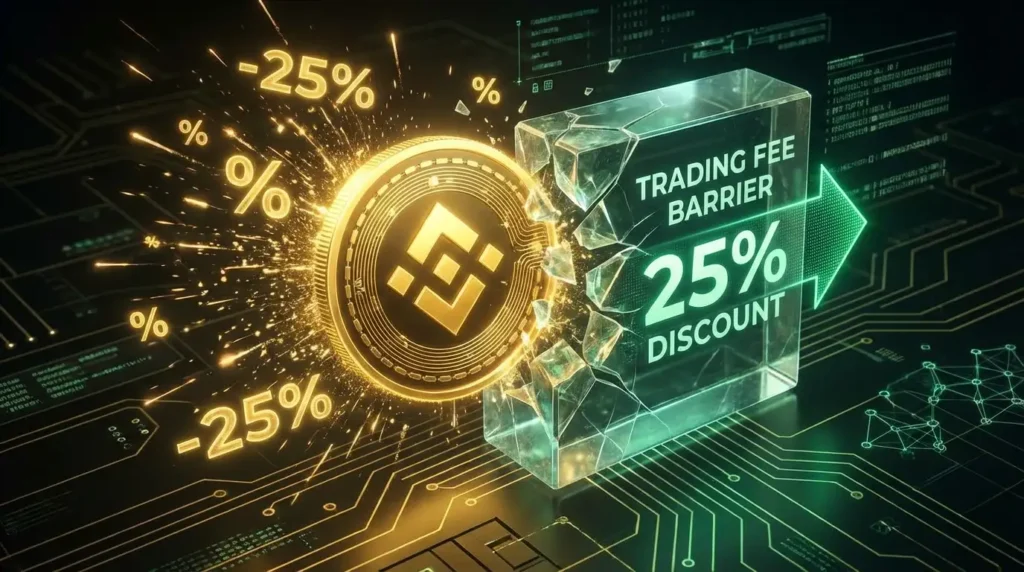
BNB’s original use case was simple and effective: pay your trading fees with BNB and get a discount. Currently, users who pay fees with BNB receive a 25% discount on spot trading and 10% on futures trading. For active traders moving significant volume, this adds up quickly.
Beyond fee discounts, BNB is used for:
- Binance Launchpad — participating in new token sales (often the most attractive early-access opportunities on the platform)
- VIP tier status — holding BNB contributes to account tier determination
- Dust conversion — converting tiny leftover cryptocurrency amounts into BNB
On BNB Chain
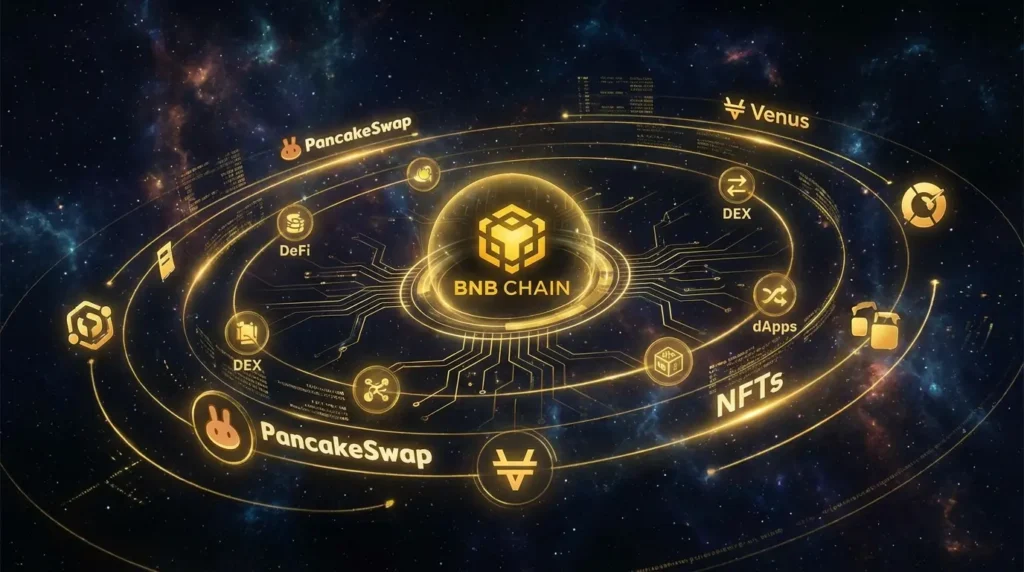
BNB Chain (formerly Binance Smart Chain, or BSC) is a blockchain network where BNB serves as the native token — the same role ETH plays on Ethereum. Every transaction, every smart contract execution, every DeFi interaction on BNB Chain requires BNB to pay gas fees.
BNB Chain’s key advantages over Ethereum:
- Faster — blocks every 0.75 seconds (recently reduced from 1 second)
- Cheaper — transaction fees typically fractions of a cent
- EVM-compatible — developers can port Ethereum projects easily
As of 2026, BNB Chain targets 20,000 transactions per second through parallel execution, with an ambitious long-term roadmap targeting 1 million TPS and sub-150ms finality.
The tradeoff: BNB Chain achieves speed and low cost partly through a more centralized validator set (21 active validators vs Ethereum’s 1+ million). This has led to criticism that BNB Chain sacrifices decentralization for performance.
opBNB: The Layer 2 Solution
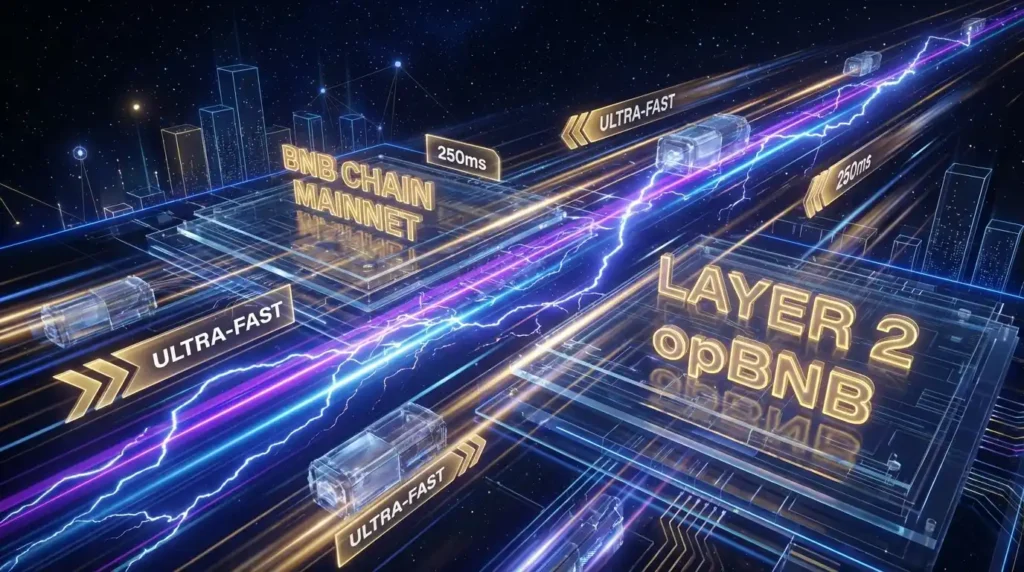
Following Ethereum’s Layer 2 playbook, BNB Chain launched opBNB — a Layer 2 network that processes transactions off the main chain at even greater speed and lower cost. In January 2026, opBNB’s Fourier hard fork halved L2 block time to 250 milliseconds, doubling network throughput. For context, that’s faster than most humans can blink.
BNB Tokenomics: The Numbers That Matter
| Metric | Data |
|---|---|
| Ticker | BNB |
| Current Price | ~$618 (April 2026) |
| Market Cap | ~$85–90 billion |
| Rank | #4 |
| Circulating Supply | ~137.7 million BNB |
| Original Max Supply | 200 million BNB |
| Target Max Supply | 100 million BNB |
| Already Burned | ~62+ million BNB (~31% of original) |
| All-Time High | ~$1,048 (September 2025) |
| BNB Chain DeFi TVL | ~$7 billion |
| Stablecoin volume on BNB Chain | ~$13.3 billion |
The Burn Mechanism: BNB’s Deflationary Engine
This is where BNB’s tokenomics get genuinely interesting. Binance launched with 200 million BNB and committed to burning (permanently destroying) tokens until only 100 million remain. As of 2026, roughly 137 million BNB remain — meaning about 63 million have already been destroyed, representing approximately 31% of the original supply.
Two burn mechanisms work simultaneously:
1. Auto-Burn (Quarterly)
Each quarter, Binance calculates a burn amount based on BNB’s price and the number of blocks produced on BNB Chain. The formula is transparent and published — no discretionary decisions. Recent quarterly burns have destroyed millions of BNB worth hundreds of millions of dollars.
2. BEP-95 Real-Time Burn
A portion of every transaction fee paid on BNB Chain is burned in real-time. Every transaction, every DeFi interaction, every NFT sale contributes micro-amounts to permanent supply reduction.
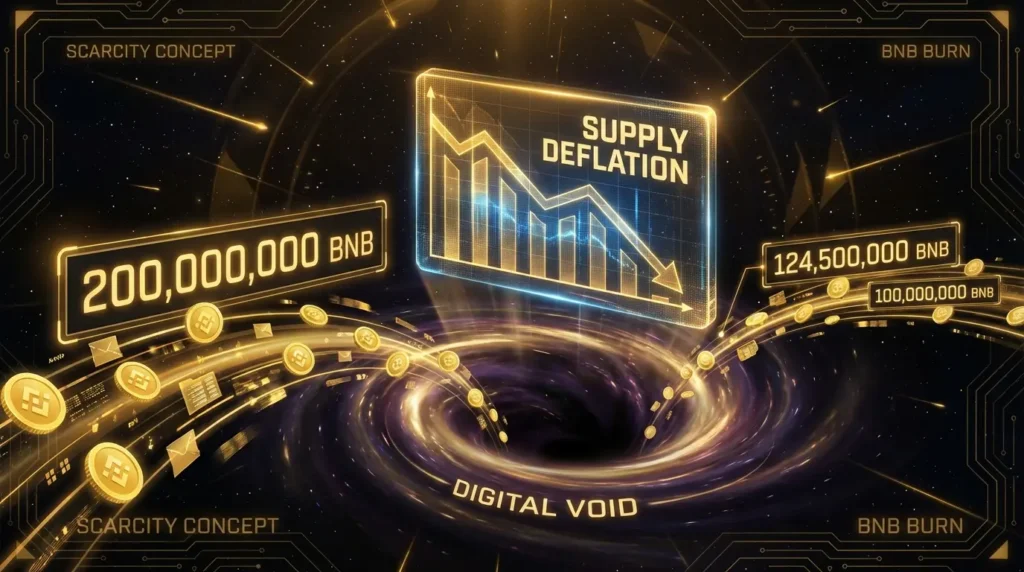
The effect: as BNB Chain usage grows, more BNB is burned. More burns = less supply. Less supply with steady or growing demand = upward price pressure. It’s a self-reinforcing loop that rewards long-term holders as the ecosystem grows.
From 2023 to 2025, BNB’s price surged to an all-time high of approximately $1,048, coinciding with significant supply reduction from burns. Correlation isn’t causation — but the timing is notable.
BNB Price History: From ICO to All-Time Highs
2017: BNB launches at approximately $0.10 during its ICO. Early investors who held through the cycles have done extraordinarily well — though few actually did.
2018–2019: The crypto winter. BNB survives and actually outperforms most tokens, dropping less severely than many competitors. Binance’s exchange growth provides real utility demand.
2020: DeFi summer. BNB Chain launches in September 2020 as a faster, cheaper alternative to Ethereum. The timing is perfect — Ethereum gas fees are astronomical, and developers flood to BSC. BNB rises from around $14 to $40 by year end.
2021: The explosion. BNB hits $686 in May 2021 — a staggering rise driven by BNB Chain’s DeFi boom, meme coin mania, and Binance’s explosive exchange growth. Then the crash: BNB drops back to around $200 by mid-2021 before partially recovering.
2022: Crypto winter part two. The collapse of Terra/Luna (which had nothing to do with BNB but rattled the entire market) and the FTX implosion crush prices across crypto. BNB drops to around $220.
2023: Regulatory nightmare. CZ pleads guilty to AML violations, pays $50 million personally, steps down as CEO, and Binance pays $4.3 billion in penalties. BNB doesn’t collapse — the market apparently decided the exchange itself was too entrenched to fail. A lesson in network effects.
2024–2025: Recovery and new highs. Under new CEO Richard Teng, Binance navigates regulatory settlements and refocuses on compliance. BNB Chain continues growing. BNB hits an all-time high of approximately $1,048 in September 2025.
Early 2026: BNB trades around $618 — down from its ATH but maintaining a strong position in the top 5. The 2026 roadmap targeting 20,000 TPS keeps developer interest high.
What Is BNB Used For?
Trading Fee Discounts
The original use case remains relevant. 25% off trading fees on the world’s largest exchange is real money for active traders. With Binance processing trillions in annual trading volume, BNB demand from fee payments alone is substantial.
BNB Chain Gas Fees
Every interaction on BNB Chain — swapping tokens, lending, borrowing, playing blockchain games — requires BNB for gas. As BNB Chain usage grows, so does organic demand for BNB.
DeFi on BNB Chain
BNB Chain hosts a significant DeFi ecosystem with approximately $7 billion in Total Value Locked. PancakeSwap (the dominant DEX), Venus (lending protocol), and hundreds of other protocols use BNB as their core asset.
Staking
BNB holders can stake their tokens to validate transactions on BNB Chain and earn rewards. Unlike Ethereum’s 32 ETH minimum, BNB staking is accessible at smaller amounts through various platforms.
New Token Launches (Launchpad)
Binance Launchpad allows BNB holders to participate in early-stage token sales for new projects. Historically, many Launchpad projects have launched at significant premiums — making BNB holdings a ticket to early access.
Payments
BNB can be used for travel bookings, credit card payments, and various merchant services through Binance’s payment integrations. Practical utility beyond speculation.
BNB Chain vs Ethereum: The Key Differences
| Feature | BNB Chain | Ethereum |
|---|---|---|
| Block time | 0.75 seconds | 12 seconds |
| Transaction fees | Fractions of a cent | Variable, often $1–20+ |
| Validators | 21 active | 1M+ |
| Decentralization | Lower | Higher |
| EVM compatibility | Yes | Native |
| DeFi TVL | ~$7 billion | ~$68 billion |
| Speed roadmap | 20,000 TPS target | Scaling via L2s |
BNB Chain wins on speed and cost. Ethereum wins on decentralization and security. For DeFi protocols handling billions, Ethereum’s security is worth the cost. For everyday users and high-frequency applications, BNB Chain’s low fees are compelling.
The Risks: An Honest Assessment
Centralization: BNB is inseparable from Binance. The token’s value depends heavily on the exchange’s continued success, user base, and regulatory standing. If Binance faces existential regulatory pressure — which it has navigated before but could face again — BNB would be severely impacted.
Regulatory risk: Binance operates in a complex global regulatory environment. Different jurisdictions have different rules, and not all of them are favorable. The 2023 settlement with US authorities resolved immediate legal risk but didn’t eliminate future regulatory uncertainty.
Validator centralization: BNB Chain’s 21-validator model makes it significantly more centralized than Ethereum or Bitcoin. In theory, a coordinated attack on these validators could compromise the network.
Exchange dependency: Unlike Bitcoin or Ethereum, which exist independently of any single company, BNB’s utility is tightly bound to a private company’s decisions and fortunes.
Competition: Solana, Avalanche, and other high-throughput blockchains compete directly with BNB Chain for developers and users.
How to Buy BNB in the US: Step by Step
Note: Binance.com itself is unavailable to US residents. BNB remains accessible through other platforms.
Step 1: Choose a US-accessible exchange
- Coinbase — supports BNB, fully US-regulated
- Kraken — offers BNB trading with strong security
- OKX — good BNB liquidity
Step 2: Create and verify your account
All regulated US exchanges require KYC verification. Have a government-issued ID ready.
Step 3: Deposit funds
Bank transfer (ACH) for lowest fees, debit card for instant access.
Step 4: Buy BNB
Search for BNB, enter your dollar amount, review fees and confirm.
Step 5: Consider storage
For significant amounts, transfer BNB to a hardware wallet (Ledger supports BNB) or a BNB Chain compatible wallet like Trust Wallet (originally created by Binance).
Step 6: Optional — stake or use in DeFi
Move BNB to BNB Chain and explore PancakeSwap, Venus, or other protocols for yield opportunities — with appropriate research into the risks.
BNB 2026 Roadmap: What’s Coming
BNB Chain unveiled an ambitious 2026 technical roadmap at the end of 2025:
20,000 TPS target — through parallel execution and a new Rust-based client, dramatically increasing throughput for complex DeFi applications.
opBNB improvements — continued Layer 2 development following the Fourier upgrade’s 250ms block time achievement.
Next-Generation Chain Rebuild (2026–2028) — a ground-up architectural rebuild targeting 1 million TPS and sub-150ms finality. If achieved, this would make BNB Chain one of the fastest blockchain networks in existence.
Key BNB Terminology for Beginners
BNB Chain: The blockchain network powered by BNB — formerly known as Binance Smart Chain (BSC).
Auto-Burn: Binance’s quarterly mechanism that calculates and destroys a portion of BNB supply based on price and network activity.
BEP-95: The protocol upgrade that introduced real-time gas fee burning on BNB Chain.
opBNB: BNB Chain’s Layer 2 network for faster, cheaper transactions.
PancakeSwap: The largest decentralized exchange on BNB Chain, similar to Uniswap on Ethereum.
Launchpad: Binance’s platform for early token sales, accessible to BNB holders.
CZ: Changpeng Zhao, Binance’s founder. A name that is either legendary or infamous depending on who you ask.
TVL: Total Value Locked — the total value of assets deposited in BNB Chain’s DeFi protocols (~$7 billion as of 2026).
Should You Buy BNB in 2026?
We are not financial advisors, and this is not financial advice. We are, however, people who read a lot of blockchain whitepapers, which is arguably worse.
The case for BNB: it has genuine utility, a clear deflationary mechanism, a massive exchange behind it, and one of the most active blockchain ecosystems outside of Ethereum. The burn mechanism creates predictable supply reduction. BNB Chain’s 2026 roadmap is technically ambitious and, if delivered, could attract significant developer interest.
The case for caution: BNB is fundamentally a bet on Binance — a private company with a complex regulatory history. The centralization of BNB Chain is a philosophical concern for crypto purists and a practical concern for those worried about network security. Competition from Solana and other high-performance chains is real.
As with all crypto investments: research thoroughly, invest only what you can afford to lose, and don’t let anyone on the internet — including this article — make your financial decisions for you.
Disclaimer: This article is for informational purposes only and does not constitute financial advice. Cryptocurrency investments carry significant risk, including the potential loss of all invested capital. Always conduct your own research before making any investment decisions.