In November 2021, the Squid Game Token launched — riding the massive hype of Netflix’s hit series. Within days, it skyrocketed from fractions of a cent to nearly $2,900. Investors poured in, desperate not to miss out.
Then it was gone.
The developers drained $3.38 million from the liquidity pool and disappeared. The website vanished. The social media accounts went dark. And investors discovered, too late, that the smart contract had been coded from the start so they could never sell their tokens.
This is a rug pull — one of the most common and devastating scams in crypto.
The Quick Answer: What Is a Rug Pull?
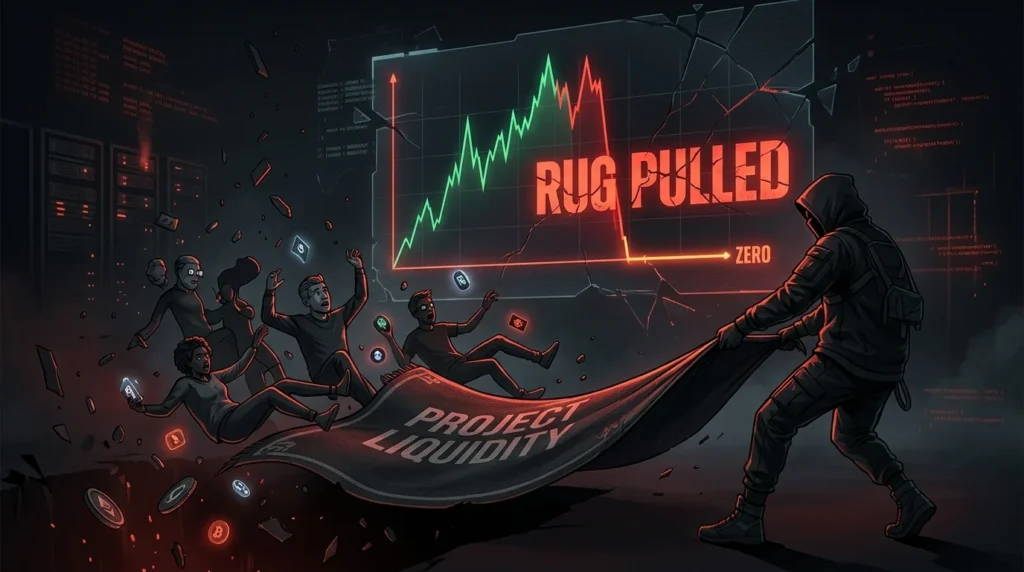
A rug pull is a type of crypto exit scam where developers create a token, attract investors, and then suddenly steal the funds — leaving everyone holding worthless tokens.
The name comes from the idiom “pulling the rug out from under someone” — a sudden removal of support that leaves the victim off-balance and helpless.
Rug pulls are most common in DeFi (decentralized finance) and memecoins, where:
- Anyone can create and list a token in minutes with no oversight
- Anonymous teams are the norm rather than the exception
- Smart contracts can hide malicious code that even developers appear legitimate
- FOMO drives investors to move fast without due diligence
In 2024 alone, approximately 92 notable rug pulls resulted in nearly $126 million stolen — and that’s just the documented cases. The actual number is far higher, with over 300,000 scam tokens estimated to have been created across various blockchains. More investors have been defrauded by rug pulls than by the collapses of FTX, Celsius, and Voyager combined.
The Three Types of Rug Pulls
Type 1: Liquidity Pull (Most Common)
This is the classic rug pull, and how the Squid Game Token worked.
How it works:
- Developers create a new token and list it on a DEX (like Uniswap or Raydium)
- To enable trading, they create a liquidity pool — pairing the new token with ETH, SOL, or a stablecoin
- They heavily promote the token: social media hype, influencer endorsements, “moon” promises
- Investors buy in, adding real money to the liquidity pool and driving the price up
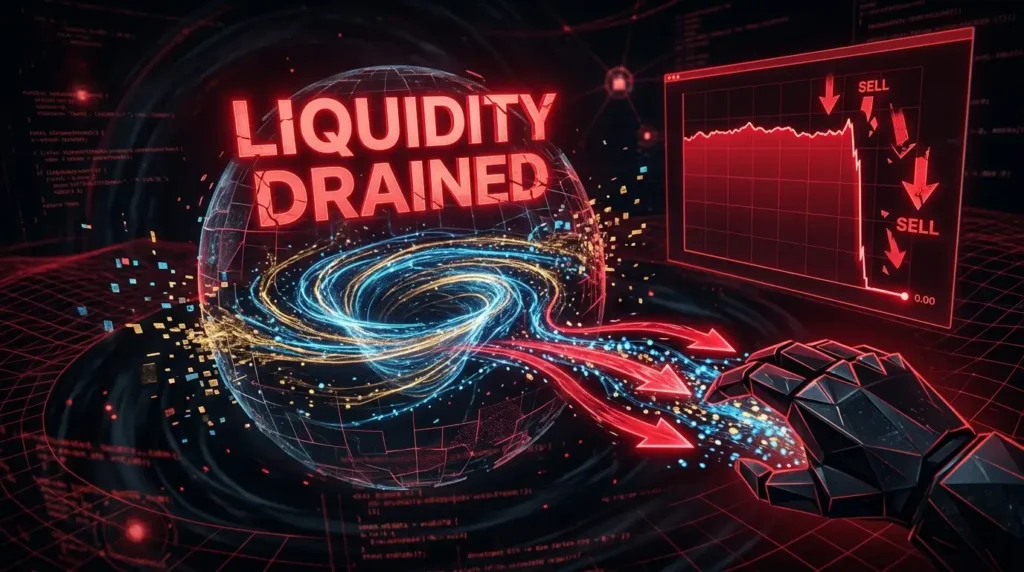
- When the price reaches a satisfying level, developers use their admin access to withdraw all the real cryptocurrency from the pool
- The token price collapses instantly to zero. Investors can’t sell because there’s no liquidity left. The money is gone.
The key vulnerability: If the liquidity pool isn’t “locked” (locked in a smart contract for a minimum time period), developers can pull it at any moment.
Type 2: Honeypot (You Can Buy But Not Sell)
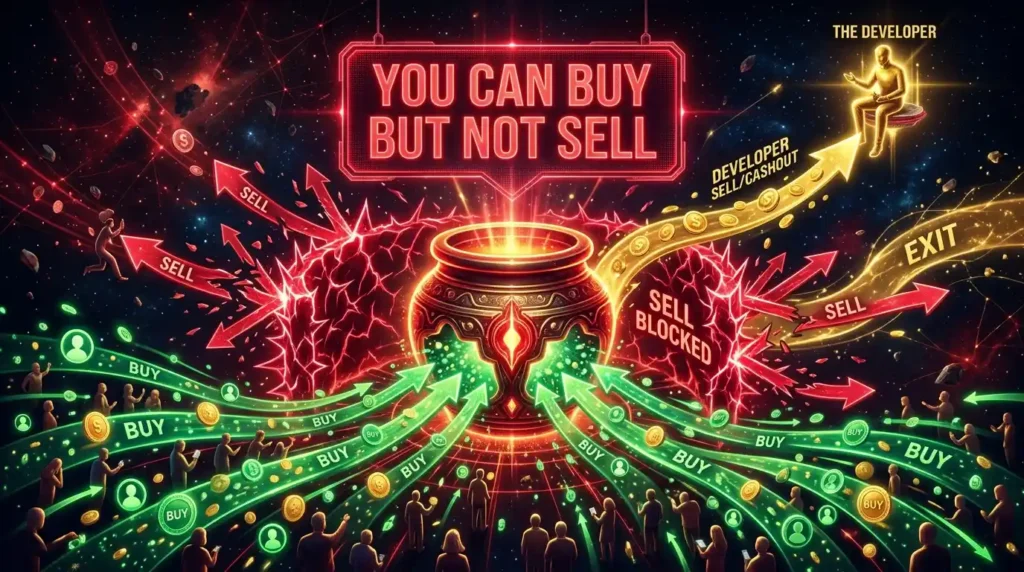
A more technically sophisticated and particularly cruel version.
How it works:
The token’s smart contract includes hidden code that allows everyone to buy the token but restricts selling to only whitelisted addresses (the developers).
From the outside, the token looks normal. The price chart goes up as more people buy in. Everything seems legitimate. But when you try to sell — nothing happens. The transaction fails. You’re trapped.
Meanwhile, the developers are the only ones who can sell. Once the price has been pumped high enough on buying pressure, they dump all their tokens and disappear.
Real example: The Squid Game Token had this feature built in — investors could buy but couldn’t sell. The spectacular price chart was entirely manufactured by one-way buying, with no way out for retail investors.
Type 3: Soft Rug (Slow Dump)
Less dramatic but equally damaging. Legally murkier.
How it works:
The developers aren’t necessarily planning a scam from day one. They launch a project, build some hype, accumulate tokens for themselves (often keeping a large percentage of the supply), and then gradually sell their holdings as retail investors buy in.
This is sometimes called a “slow rug” — instead of a sudden collapse, the price erodes steadily as insiders cash out while continuing to promote the project publicly.
The ethical gray zone: Soft rugs can look like normal market activity. Developers can argue they were simply “selling their legitimately held tokens.” But when combined with false promises and misleading marketing, prosecutors have successfully charged these as securities fraud.
Famous Rug Pulls: Real Cases
Squid Game Token (2021) — $3.38 million
The textbook case. Used Netflix show branding, promised a play-to-earn game, hardcoded a “no sell” restriction for non-developer wallets. Price went from fractions to $2,900, then to zero in minutes.
OneCoin (2014–2019) — ~$4 billion
Not a DeFi rug pull, but the largest crypto fraud in history. Marketed as a “Bitcoin killer” but had no actual blockchain. Founder Ruja Ignatova (“Cryptoqueen”) raised billions through network marketing and then disappeared. She remains one of Interpol’s most wanted fugitives.
Thodex (2021) — ~$2 billion
Turkish crypto exchange that suddenly stopped withdrawals, then went offline entirely. Founder Faruk Fatih Özer fled the country with funds belonging to 400,000+ users. Later arrested and sentenced to over 11,000 years in prison.
$LIBRA Token (2025)
Promoted by Argentine President Javier Milei on social media as a project to “support Argentine economic growth.” After significant investment poured in, developers allegedly withdrew funds and the price collapsed. Led to fraud investigations and political scandal — a reminder that even high-profile endorsements mean nothing.
Pump.fun memecoins (Ongoing)
On Solana’s Pump.fun platform, thousands of tokens launch daily. In 2025–2026, a common pattern emerged: insiders snipe large percentages of supply at launch, coordinate a rapid price pump through social media, then dump everything on retail buyers within hours or days. The losses per incident are smaller but happen constantly.
Hard Rug vs Soft Rug
| Type | Intent | Method | Legal Status |
|---|---|---|---|
| Hard Rug | Fraud from the start | Coded malicious features, liquidity pull, honeypot | Illegal — fraud, wire fraud, securities fraud |
| Soft Rug | May develop later | Insider dump, project abandonment | Legal gray area, increasingly prosecuted |
Hard rugs are unambiguously criminal. Soft rugs depend on whether developers made false promises — if they did, prosecutors in the US have charged these as fraud.
The Red Flags: How to Spot a Rug Pull Before It Happens
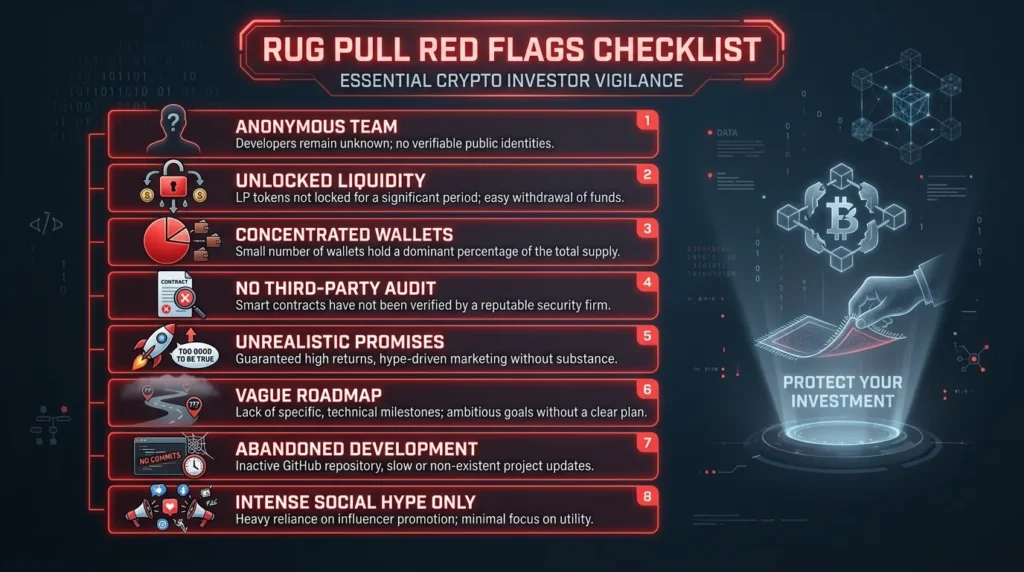
🚩 Anonymous team
Legitimate projects have identifiable founders with real histories, LinkedIn profiles, and verifiable track records. Anonymous teams aren’t always scammers, but they have no accountability. If things go wrong, there’s nobody to find.
🚩 Unlocked liquidity
For any DEX token, check whether the liquidity is locked using tools like DexScreener, Token Sniffer, or RugCheck. If developers can withdraw liquidity at any time, they probably will. Locked liquidity with a multi-year timelock is a positive sign.
🚩 Concentrated token distribution
Use blockchain explorers to check how tokens are distributed. If the top 10 wallets hold 50%+ of the supply — and those wallets are developer-controlled — a coordinated dump is a real risk. Legitimate projects distribute tokens widely.
🚩 No audit or unverified smart contract
Reputable projects have their smart contracts audited by independent security firms (CertiK, Hacken, Trail of Bits). Check if an audit exists and review it for warnings. Unaudited contracts can hide the malicious code that enables rug pulls.
🚩 Unrealistic return promises
“1000x guaranteed,” “get rich in 30 days,” “passive income forever” — these phrases are almost always scam indicators. Legitimate crypto projects don’t promise guaranteed returns.
🚩 Extreme urgency and FOMO pressure
“Buy now before it’s too late!” “Only 24 hours left!” “Limited allocation!” Scammers use urgency to prevent you from thinking clearly. Legitimate projects don’t need to rush you.
🚩 Paid influencers and bot-driven hype
Sudden explosion of posts from accounts with few followers. Bot-generated comments saying “this is the next 100x.” Influencers promoting a token they clearly haven’t researched. These are coordinated marketing campaigns for tokens about to be rugged.
🚩 You can’t find any information about the project
No verifiable team. No detailed whitepaper. No clear explanation of what the project actually does. No Github with code. A real project has substance — a rug pull only needs a nice website and social media accounts.
🚩 The honeypot test
For suspicious tokens, buy the absolute minimum amount possible. Then immediately try to sell it. If you can’t sell, it’s a honeypot — get out. This costs you a small transaction fee but could save your entire investment.
Tools to Check Before Buying a New Token
| Tool | What It Checks |
|---|---|
| Token Sniffer (tokensniffer.com) | Contract audit, honeypot detection, scam score |
| DexScreener (dexscreener.com) | Liquidity lock status, holder distribution, trading activity |
| RugCheck (rugcheck.xyz) | Solana token risk analysis |
| Etherscan / Solscan | On-chain data, wallet holdings, contract code |
| Revoke.cash | Check and revoke token approvals you’ve granted |
Running a new token through these tools takes 2–3 minutes. That 2–3 minutes has saved investors thousands of dollars countless times.
What to Do If You’ve Been Rugged
First, the hard truth: recovery is extremely rare. Blockchain transactions are irreversible. Anonymous developers are nearly impossible to trace. Most victims never see their money again.
That said:
- Report it: File a report with the FBI (ic3.gov), FTC (reportfraud.ftc.gov), and your state’s securities regulator
- Claim the tax loss: In the US, rug pull losses are claimable as capital losses, which can offset other investment gains. Use crypto tax software to document the loss.
- Alert the community: Post detailed information on Twitter/X, Reddit, and blockchain-specific forums. This doesn’t recover your money but can prevent others from losing theirs.
- Check for any frozen assets: In some cases (particularly centralized exchanges), law enforcement has been able to freeze developer wallets before funds are fully laundered. This is rare but has happened.
Key Terminology
Rug Pull: A crypto exit scam where developers steal investor funds by draining liquidity, dumping tokens, or using malicious contract features.
Liquidity Pool: A reserve of two tokens locked in a smart contract enabling DEX trading. The target of liquidity rug pulls.
Honeypot: A token contract coded to allow buying but block selling — trapping investors.
Hard Rug: A rug pull planned from the start, with malicious contract code built in.
Soft Rug: A gradual dump by insiders combined with project abandonment, without coded exploits.
Liquidity Lock: Locking liquidity pool tokens in a smart contract for a set time period, preventing developers from withdrawing them. A safety signal.
Token Audit: An independent security review of a token’s smart contract code looking for vulnerabilities and malicious functions.
Exit Scam: A broader term for any project that raises funds and then disappears, of which rug pulls are a common variant.
The Bottom Line
Rug pulls are the most common crime in crypto. More investors have been defrauded by them than by every major exchange collapse combined. They work because they exploit human psychology — FOMO, greed, the dream of missing out on “the next 100x.”
The defense isn’t complicated. Slow down. Do the 2-minute token check. Ask the basic questions: who is the team? Is the liquidity locked? What does the project actually do? Does anything feel rushed?
Most rug pulls are obvious in hindsight. Many are preventable with basic research in advance. The ones that aren’t — that look completely legitimate until the moment they’re not — are the reason you should never invest more in any new token than you can genuinely afford to lose completely.
The rug is always under your feet in crypto. Check what’s holding it down before you stand on it. 🪤
Disclaimer: This article is for informational purposes only and does not constitute financial advice. Cryptocurrency investments carry significant risk, including the potential loss of all invested capital. Always conduct your own research before making any investment decisions.