In the world of fast blockchains, everyone claims to be fast. Solana actually is.
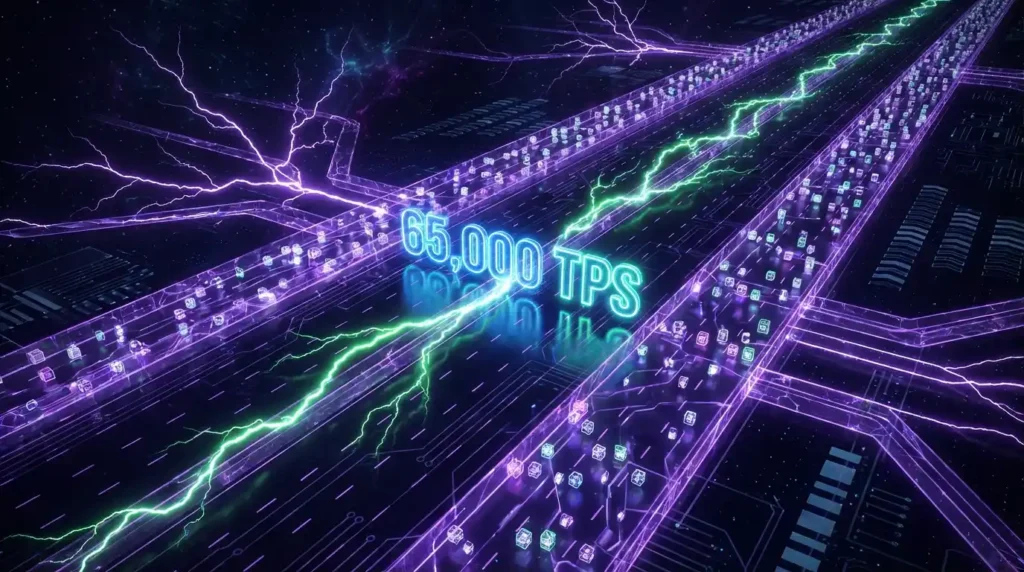
While Ethereum processes around 15–30 transactions per second and Bitcoin manages a leisurely 7, Solana handles over 1,000 real transactions per second on mainnet — with the new Firedancer client potentially pushing that to 1,000,000 TPS. That’s not a typo. One million transactions per second, at a cost of less than $0.001 each.
This is why Visa, Shopify, and major payment processors have built on Solana. This is why meme coins launch on Solana rather than Ethereum. This is why developers who care about user experience increasingly choose Solana — because on a blockchain that costs a fraction of a cent per transaction and confirms in milliseconds, you can build things that simply aren’t possible elsewhere.
As of April 2026, Solana trades around $83–84, sits at #5–7 by market cap with approximately $48 billion, and hosts one of the most active DeFi and NFT ecosystems in crypto. It’s also the blockchain that survived the FTX collapse — a test of resilience that few expected it to pass.
Let’s break it all down.
The Quick Answer: What Is Solana?
Solana is a high-performance Layer 1 blockchain designed to scale globally without the complexity of Layer 2 solutions or sharding. It processes transactions at extraordinary speed and near-zero cost using a unique consensus mechanism called Proof of History (PoH) combined with Proof of Stake.
SOL is the native cryptocurrency of the Solana network. It’s used to pay transaction fees, stake to secure the network, and participate in governance. Think of SOL as the fuel that powers one of the fastest financial computers ever built.
Who Created Solana? The Engineer’s Blockchain
Solana was founded in 2017 by Anatoly Yakovenko, a former senior engineer at Qualcomm who also worked at Dropbox. His background in building high-performance telecommunications systems directly influenced Solana’s design philosophy: treat a blockchain like a hardware problem, and optimize accordingly.
Yakovenko was joined by Greg Fitzgerald, Raj Gokal, and Stephen Akridge to form Solana Labs. The project is supported by the Solana Foundation, a non-profit based in Switzerland that oversees ecosystem development and grants.
The early funding was serious money from serious investors: Andreessen Horowitz (a16z), Multicoin Capital, Polychain Capital, and Jump Crypto all backed Solana early. The initial seed sale in April 2018 priced SOL at just $0.04 — a number that looks almost impossible given where the price has been since.
How Does Solana Actually Work?
Proof of History: The Secret Weapon
Every other blockchain has a problem: nodes need to communicate with each other constantly to agree on what time a transaction occurred. This back-and-forth creates bottlenecks that limit speed.
Solana’s breakthrough insight: what if you eliminated the need for that communication entirely?

Proof of History is essentially a cryptographic clock built into the network. It creates a verifiable, tamper-proof record of the passage of time — a sequence of cryptographic proofs that anyone can verify without asking the network to confirm it.
Because every validator can trust this internal timeline independently, the network can organize and process transactions in parallel across CPU cores, rather than queuing them in a single line. It’s the difference between a single checkout lane at a grocery store and 50 lanes running simultaneously.
This is the secret behind Solana’s speed.
Proof of Stake: The Security Layer
While PoH orders transactions, Proof of Stake validates them. Validators stake SOL as collateral to participate in block production. Honest validators earn rewards. Malicious validators risk having their stake “slashed” (partially destroyed).
Tower BFT: Instant Consensus
Solana’s custom Byzantine Fault Tolerance protocol uses the PoH clock to reach consensus almost instantly, preventing the forks (competing chain versions) that slow down other networks.
Firedancer: The Next Leap
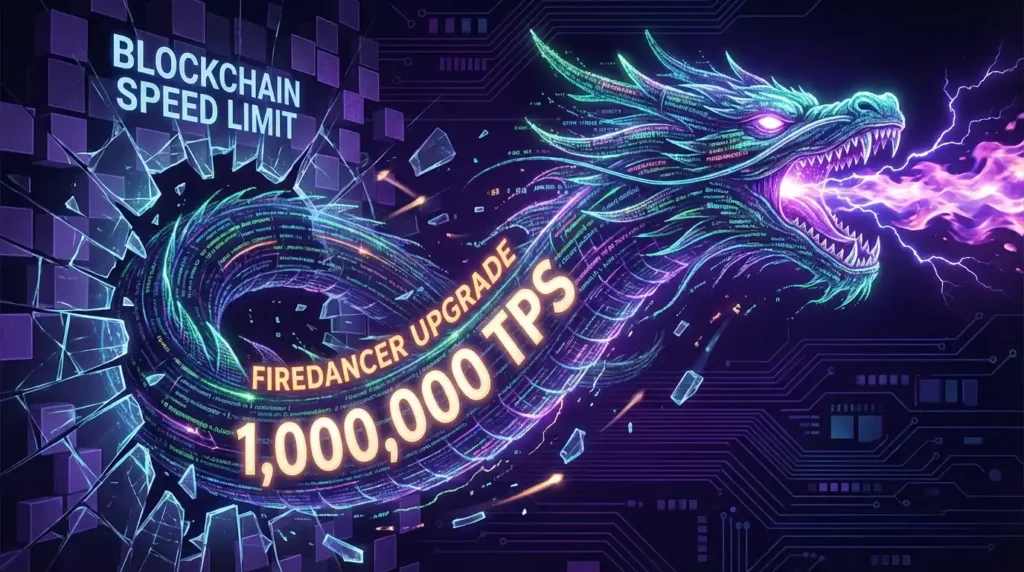
In 2025–2026, Solana began deploying Firedancer — a completely new validator client built from scratch by Jump Crypto. Unlike the original Rust-based client, Firedancer is written in C and C++ for maximum performance. Early tests suggest it can handle over 1,000,000 transactions per second — a figure that would make Solana genuinely competitive with the world’s major payment networks at global scale.
Solana Tokenomics: The Numbers That Matter
| Metric | Data |
|---|---|
| Ticker | SOL |
| Current Price | ~$83–84 (April 2026) |
| Market Cap | ~$48 billion |
| Rank | #5–7 |
| Circulating Supply | ~572 million SOL |
| Total Supply | ~619 million SOL |
| Maximum Supply | No hard cap |
| All-Time High | ~$295 (November 2021) |
| Current Inflation Rate | ~3.9% annually (declining) |
| Long-term Inflation Floor | 1.5% |
| SOL Staked | ~60%+ of circulating supply |
| Staking APY | ~7–8% |
| Transaction Fee | <$0.001 |
No Hard Cap — But Declining Inflation
Unlike Bitcoin’s 21 million hard cap, Solana has no maximum supply. This is a common concern for newcomers. Here’s how it actually works:
Solana launched with an 8% annual inflation rate. That rate decreases by 15% every year until it reaches a permanent floor of 1.5%. By 2026, the inflation rate has tapered to approximately 3.9% annually — and it keeps falling.
Additionally, 50% of every transaction fee is burned — permanently removed from supply. As network usage grows, the burn rate increases, partially or fully offsetting new issuance.
The result is a disinflationary model that gradually approaches minimal inflation over time — not Bitcoin’s absolute scarcity, but a predictable, declining issuance schedule that becomes less dilutive each year.
Staking: Earning While Securing the Network
With over 60% of circulating SOL staked, Solana has one of the highest staking participation rates in crypto. This is significant — it means most SOL holders are earning yield rather than selling, which reduces available selling pressure.
Staking options:
- Native staking: Delegate SOL directly to a validator — no minimum, 7–8% APY
- Liquid staking: Platforms like Jito offer jitoSOL — earn staking rewards plus extra MEV yield (~8–10% combined) while keeping your SOL liquid
- Exchange staking: Coinbase and others offer simplified staking at slightly lower yields
Initial Distribution: The VC Concern
Solana’s early token distribution drew criticism. Of the initial supply: 16.23% went to seed investors, 12.92% to the founding sale, 12.79% to team members, and 10.46% to the Solana Foundation. This concentrated early ownership among insiders and institutional investors — a legitimate concern about centralization of wealth.
By 2026, the lock-up periods for early investors and team members are largely complete, meaning the distribution has become more market-driven and decentralized over time.
Solana’s Price History: Phoenix Rising
2018–2019: SOL launches at $0.04 in a seed sale. Spends two years quietly building. Nobody outside of crypto insiders notices.
2020: DeFi summer and BNB Chain’s rise demonstrate that people want alternatives to Ethereum’s high fees. Solana’s mainnet goes live. SOL rises from around $0.50 to $1.50 by year end.
2021: The breakout. SOL goes from $1.50 in January to nearly $260 in November — a 170x gain in one year. This is driven by NFT mania (Solana NFTs are cheap to mint and trade), DeFi growth, and massive institutional attention. SOL becomes the dominant “Ethereum killer” narrative.
2022: The FTX catastrophe. FTX and its sister company Alameda Research were massive SOL holders and ecosystem backers. When FTX collapsed in November 2022, SOL dropped from around $40 to below $10 — a devastating blow that many thought was terminal.

2023: The comeback nobody expected. Despite losing its primary backer, Solana’s ecosystem kept building. Developers stayed. Users stayed. The meme coin season of 2023 brought enormous activity to Solana. SOL climbed from $10 back above $100 by year end.
2024–2025: Institutional adoption accelerates. Spot Solana ETFs launch in late 2025, with Bitwise (BSOL) and Fidelity (FSOL) seeing significant inflows, total Solana ETF assets surpassing $1 billion. SOL reaches a new all-time high of approximately $295 in late 2021 territory… and then some analysts say higher in 2025. Visa and Shopify build payment infrastructure on Solana.
Early 2026: SOL trades around $83–84, down significantly from its peak but maintaining a strong ecosystem position. Forward Industries (a NASDAQ company) converted its entire treasury strategy to SOL, holding nearly 7 million SOL worth close to $1 billion.
What Is Solana Used For?
High-Speed DeFi
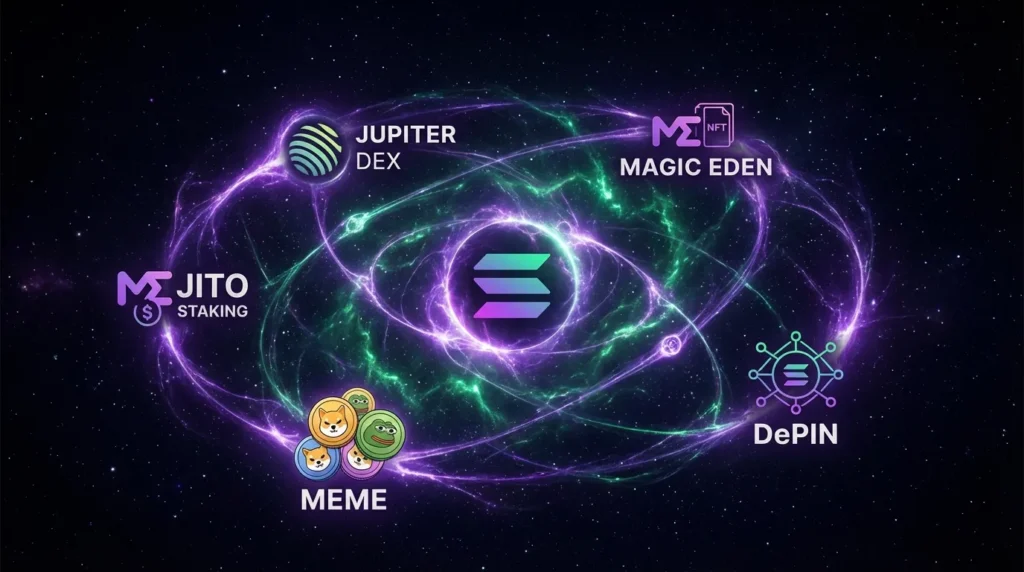
Solana’s speed and near-zero fees make it ideal for financial applications that demand performance. Jupiter is the leading DEX aggregator, routing trades across Solana’s liquidity for best prices. Jito dominates liquid staking with $1.9 billion staked. Kamino automatically manages DeFi positions for maximum yield.
The key metric: Solana’s DeFi ecosystem processes billions in daily volume at costs so low that micro-transactions and high-frequency strategies are actually economically viable — something impossible on Ethereum mainnet.
Meme Coins and Token Launches
This might seem trivial, but it’s actually one of Solana’s most significant use cases by activity. The pump.fun platform (and its successors) made launching meme coins on Solana so cheap and fast that thousands of new tokens launch daily. Most fail, some succeed wildly. The activity drives enormous transaction volume and fee revenue for the network.
NFTs
Solana became a major NFT hub in 2021 partly because minting an NFT costs fractions of a cent rather than $50–200 on Ethereum. Magic Eden and Tensor are the leading marketplaces. Solana NFTs are cheaper to create, cheaper to buy, and faster to transfer.
Payments
This is Solana’s most ambitious long-term use case. Visa has integrated Solana’s network for settlement of USDC stablecoin transactions. Shopify merchants can accept Solana Pay for instant, near-free payments. The network’s performance specs — 65,000+ TPS, sub-second finality, $0.001 fees — make it genuinely competitive with traditional payment rails for the first time in crypto history.
DePIN (Decentralized Physical Infrastructure)
Solana has become the dominant blockchain for DePIN projects — networks that use token incentives to build real-world infrastructure. Helium (wireless networks), Render (GPU computing), Hivemapper (maps) — all run on Solana. This represents a fundamentally new use case for blockchain beyond finance.
The FTX Test: Solana’s Most Important Story
No discussion of Solana is complete without addressing FTX.
When Sam Bankman-Fried’s exchange collapsed in November 2022, Solana lost its most prominent advocate and one of its largest token holders. FTX and Alameda Research held enormous amounts of SOL — most of which was eventually liquidated through bankruptcy proceedings.
The conventional wisdom was that Solana would collapse without FTX’s support. The ecosystem would defect to other chains. The narrative was dead.
What actually happened: developers kept building. The ecosystem didn’t just survive — it grew. The meme coin supercycle of 2023, the DeFi renaissance, the NFT market recovery — all happened on Solana. By 2024, Solana had arguably more developer momentum than it did when FTX was at its peak.
This survival story is now central to Solana’s identity. It demonstrated that the technology had genuine utility independent of any single backer — the most important test any blockchain can pass.
Solana vs Ethereum: The Core Differences
| Feature | Solana (SOL) | Ethereum (ETH) |
|---|---|---|
| Transaction speed | 1,000+ TPS (65,000+ theoretical) | 15–30 TPS |
| Transaction cost | <$0.001 | $1–20+ (mainnet) |
| Consensus | PoH + PoS | PoS |
| Finality | ~400ms | ~12 seconds |
| Max supply | No hard cap | No hard cap |
| Staking APY | ~7–8% | ~3–5% |
| Architecture | Single-layer (monolithic) | Multi-layer (modular) |
| DeFi TVL | ~$8–10 billion | ~$68 billion |
| Primary strength | Speed and cost | Security and decentralization |
Solana wins on raw performance. Ethereum wins on security, decentralization, and total ecosystem size. Both serve genuine needs — they’re not perfect substitutes.
Solana Risks: The Honest Version
Network outages: Solana has experienced multiple network outages and slowdowns since launch. While the network’s reliability has improved significantly, this history remains a legitimate concern for applications requiring 100% uptime.
Centralization concerns: Solana’s validator requirements are more demanding than Ethereum’s — running a validator requires significant hardware investment, which limits participation. The network has fewer validators than Ethereum.
No hard cap: For investors who want Bitcoin-like absolute scarcity, Solana’s inflationary model is a disadvantage — even with the declining schedule.
FTX overhang: While largely resolved, some liquidations of FTX estate SOL holdings created selling pressure in 2023–2024.
Competition: Ethereum’s Layer 2 ecosystem (Arbitrum, Base, Optimism) offers competitive speed and cost for many use cases. New chains like Sui and Aptos compete directly with Solana’s performance positioning.
Concentration risk: Early token distribution gave significant holdings to VCs and team members. While lock-ups have largely expired, large holders can influence price significantly.
How to Buy Solana in the US: Step by Step
Step 1: Choose a regulated exchange
- Coinbase — most beginner-friendly, supports SOL staking
- Kraken — excellent security, competitive fees, good SOL liquidity
- Gemini — strong compliance, straightforward interface
Step 2: Create and verify your account
KYC verification required on all regulated US exchanges. Government-issued ID needed.
Step 3: Deposit funds
ACH bank transfer for lowest fees (1–3 days), debit card for instant access.
Step 4: Buy SOL
Search for SOL or Solana, enter your dollar amount, confirm.
Step 5: Consider a Solana wallet
For DeFi and NFT participation, you’ll need a Solana-native wallet. Phantom is the leading option — available as a browser extension and mobile app, free to download. Backpack is a strong alternative.
Step 6: Optional — stake for yield
Through Coinbase or directly through Phantom wallet, you can stake SOL to earn 7–8% APY. For higher yields, explore Jito’s liquid staking (jitoSOL) for additional MEV rewards.
Solana’s 2026 Roadmap: The Alpenglow Upgrade
Solana’s most significant upcoming upgrade is Alpenglow — a fundamental redesign of the consensus mechanism aimed at dramatically reducing latency and improving finality speed.
Key improvements:
- Votor — a new voting protocol replacing Tower BFT for faster consensus
- Rotor — replaces Turbine for more efficient block propagation
- Target: sub-150ms block times, bringing Solana closer to real-time financial infrastructure
Combined with ongoing Firedancer deployment, 2026 could see Solana become meaningfully faster than any major financial network in existence.
Key Solana Terminology for Beginners
Proof of History (PoH): Solana’s cryptographic clock — a verifiable record of time passage that allows parallel transaction processing without constant node communication.
Firedancer: A new Solana validator client built by Jump Crypto capable of 1,000,000+ TPS, currently being deployed across the network.
Epoch: A period of approximately 2–3 days on Solana, at the end of which staking rewards are distributed and validators can be changed.
Jupiter: The leading DEX aggregator on Solana, finding the best prices across all liquidity sources.
Jito: Liquid staking protocol offering jitoSOL — staked SOL that remains liquid and earns extra MEV yield.
Pump.fun: Solana’s meme coin launchpad — made creating new tokens trivially cheap, driving enormous network activity.
DePIN: Decentralized Physical Infrastructure Networks — blockchain-incentivized real-world infrastructure projects, Solana’s emerging specialty.
MEV: Maximum Extractable Value — extra profit validators earn by strategically ordering transactions. Jito captures and redistributes some of this to stakers.
Should You Buy Solana in 2026?
We are not financial advisors. What we are is people who have watched Solana survive things that should have killed it and keep coming back stronger.
The case for SOL: genuine technological advantage, proven resilience through the FTX catastrophe, growing institutional adoption (ETFs, Visa, Shopify), one of the highest staking yields among major cryptocurrencies, and a development roadmap that could make it the fastest blockchain network by a significant margin.
The case for caution: no hard supply cap, history of network outages, early VC concentration, and competition from Ethereum’s L2 ecosystem and newer high-performance chains.
Solana is not Bitcoin’s “digital gold” narrative or Ethereum’s “world computer.” It’s something more specific and more interesting: a genuine attempt to build blockchain infrastructure capable of handling global-scale finance without compromising on cost or speed.
Whether that vision succeeds at the scale its builders imagine remains to be seen. But the technology works, the ecosystem is real, and the team has earned their reputation for resilience.
Disclaimer: This article is for informational purposes only and does not constitute financial advice. Cryptocurrency investments carry significant risk, including the potential loss of all invested capital. Always conduct your own research before making any investment decisions.