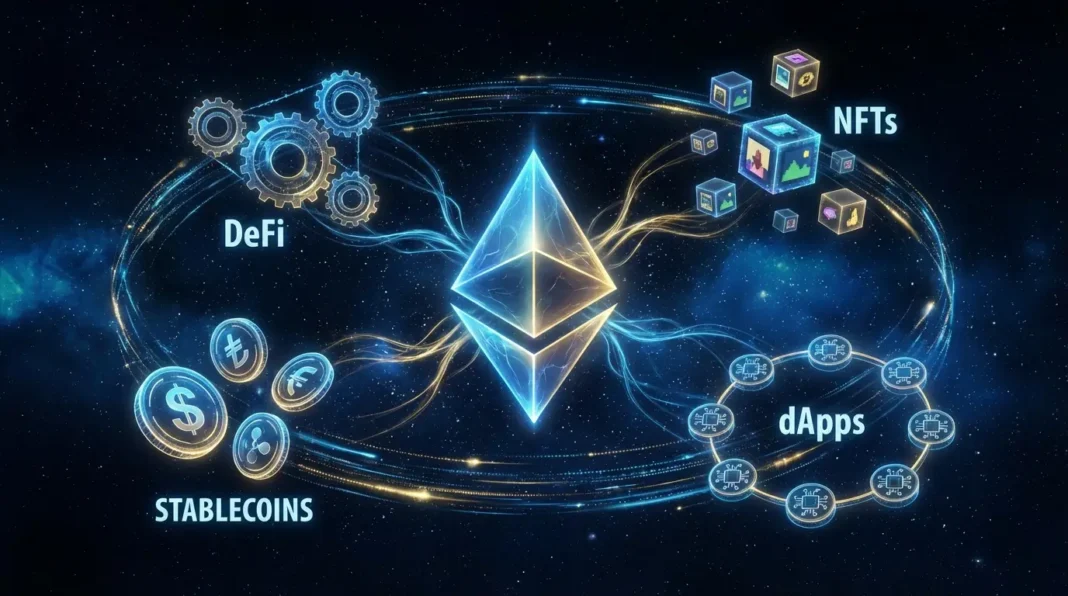
If Ethereum is the world’s computer, Polkadot wants to be the internet that connects all the world’s computers together.
That might sound abstract. But the problem Polkadot was built to solve is real: blockchains are islands. Bitcoin can’t talk to Ethereum. Ethereum can’t talk to Solana. Each chain has its own rules, its own assets, and its own security — and moving value or data between them requires bridges that are notoriously vulnerable to hacks.
Polkadot’s answer: build a Layer 0 network — a meta-protocol that sits beneath individual blockchains and lets them share security, communicate freely, and interoperate natively.
In March 2026, Polkadot executed the largest tokenomics overhaul in its history: a hard supply cap of 2.1 billion DOT, a 53.6% cut in annual issuance, and a reduction in the staking unbonding period from 28 days to 24–48 hours. A spot DOT ETF launched on Nasdaq. And the ecosystem pivoted from building infrastructure to shipping user-facing applications.
DOT currently trades around $1.24, has a market cap of approximately $2.1 billion, and ranks around #30 by market cap — significantly below its all-time high of $54.98, but with a technical foundation and token economics that have never been stronger.
Let’s break it all down.
The Quick Answer: What Is Polkadot?
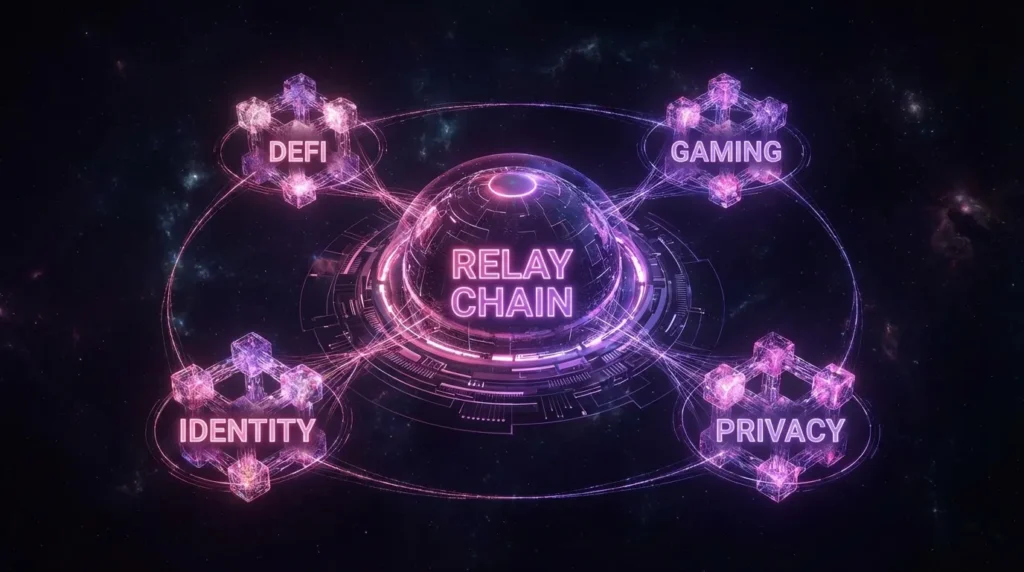
Polkadot is a Layer 0 blockchain protocol designed to enable interoperability between different blockchains. Instead of being just one blockchain, Polkadot is a network of blockchains — a “multi-chain” ecosystem where independent chains (called parachains) connect to a central Relay Chain that provides shared security and cross-chain communication.
Think of Polkadot as the internet routing protocol — it doesn’t host the websites, but it provides the standards and infrastructure that allow them all to communicate. Individual blockchains (parachains) handle their own use cases, while Polkadot ensures they can share data and assets securely.
DOT is the native token used to:
- Stake to secure the network via Nominated Proof of Stake (NPoS)
- Participate in on-chain governance (vote on protocol changes)
- Bond to add new parachains to the network
- Pay for Coretime (compute time) in the Polkadot 2.0 model
Who Created Polkadot? The Gavin Wood Story
Polkadot was founded by Dr. Gavin Wood — one of the most credentialed figures in all of blockchain. Wood was an Ethereum co-founder, wrote the Ethereum Yellow Paper (the technical specification), created the Solidity programming language (still the most widely used smart contract language), and coined the term “Web3.”
After leaving Ethereum in 2016, Wood founded Parity Technologies and the Web3 Foundation — a Swiss non-profit with a mission to facilitate a fully decentralized web. Polkadot is the Web3 Foundation’s flagship project.
Wood’s co-founders were Robert Habermeier and Peter Czaban. Polkadot’s first ICO was held in October 2017 at $0.29 per DOT, raising approximately $145 million. The mainnet launched in May 2020.
The philosophical vision: the internet was built as a permissionless, decentralized network for information. Polkadot aims to build the equivalent infrastructure for value — a blockchain internet where different networks interoperate as freely as websites do today.
How Does Polkadot Actually Work?
The Four Core Components
1. Relay Chain
The heart of Polkadot. The Relay Chain provides consensus, security, and interoperability for the entire network. It doesn’t host smart contracts or dApps — it handles the fundamental coordination layer that everything else plugs into.
2. Parachains
Independent blockchains that connect to the Relay Chain. Each parachain can have:
- Its own token
- Its own governance
- Its own specific use case (DeFi, gaming, identity, etc.)
- Custom programming logic
Parachains share Polkadot’s security — meaning a new parachain doesn’t need to bootstrap its own validator set. It inherits the economic security of the entire Polkadot network from day one. This is a significant advantage: most Layer 1 blockchains must build their own security from scratch.
3. Bridges
Connect Polkadot to external blockchains like Ethereum and Bitcoin, enabling assets and data to flow between Polkadot’s ecosystem and the broader crypto universe.
4. Cross-Chain Message Passing (XCM)
The protocol that allows parachains to send messages and transfer assets to each other. XCM is Polkadot’s native cross-chain communication standard — more secure than third-party bridges because it’s built into the protocol itself.
Nominated Proof of Stake (NPoS)
Polkadot uses a unique consensus mechanism called Nominated Proof of Stake (NPoS):
- Validators run nodes that produce blocks and confirm transactions across parachains. They must stake DOT as collateral.
- Nominators support validators by backing them with DOT stakes. They share in rewards but also in slashing penalties if their validator misbehaves.
This system creates two levels of participation: technical operators (validators) and passive investors (nominators) who contribute to security without running nodes themselves. Nomination pools allow participation with as little as 1 DOT.
Polkadot 2.0: Agile Coretime
The Polkadot 2.0 upgrade (rolling out in 2025–2026) fundamentally changes how blockchains access Polkadot’s compute resources:
Old model: Parachains won dedicated slots through auctions, locking large amounts of DOT for up to 96 weeks.
New model (Agile Coretime): Parachains can purchase compute time (“coretime”) on a flexible, pay-as-you-go basis — buying only the compute they need, when they need it.
This dramatically lowers the barrier to building on Polkadot: small teams and experimental projects no longer need to lock millions in DOT to participate. The ecosystem becomes more dynamic and competitive.
The March 2026 Tokenomics Overhaul: The Biggest Change in Polkadot’s History
In March 2026, Polkadot executed the most significant economic restructuring since its launch — driven by two governance referendums (1710 and 1828) approved by DOT holders.
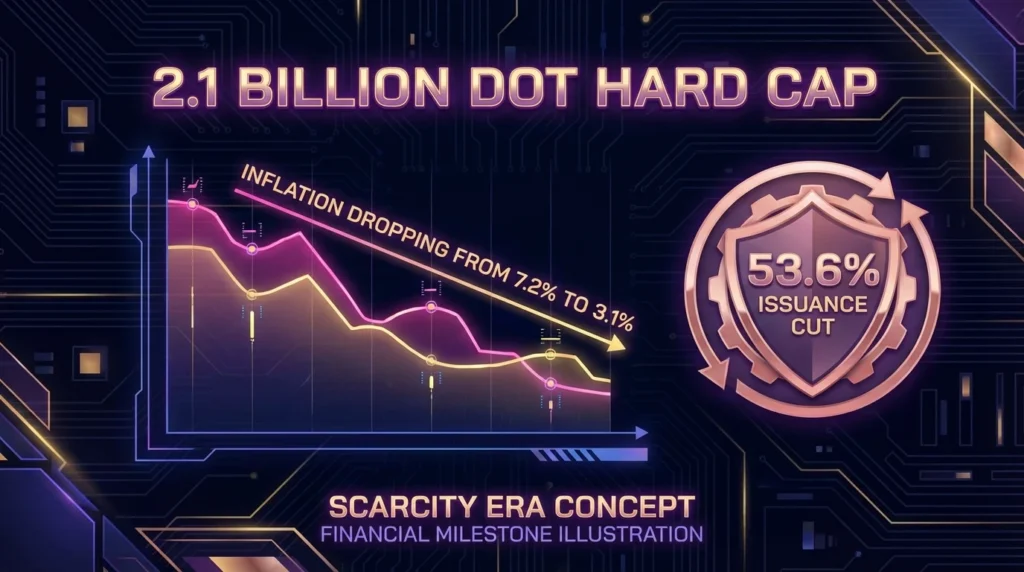
Hard Supply Cap: 2.1 Billion DOT
Previously, Polkadot had no hard cap — supply could theoretically have expanded to over 3.4 billion DOT by 2040. The community voted to implement a hard cap of 2.1 billion DOT.
This transforms DOT from an inflationary asset into a scarce one — more comparable to Bitcoin’s fixed supply model than Ethereum’s uncapped (but deflationary) approach.
53.6% Issuance Cut
Annual DOT issuance was slashed from approximately 120 million to approximately 56 million DOT — a reduction of 53.6%. Inflation fell from ~7.2% to ~3.1% annually.
This directly reduces selling pressure from validators and stakers who previously received larger rewards and often sold portions to cover operating costs.
Unbonding Period: 28 Days → 24–48 Hours
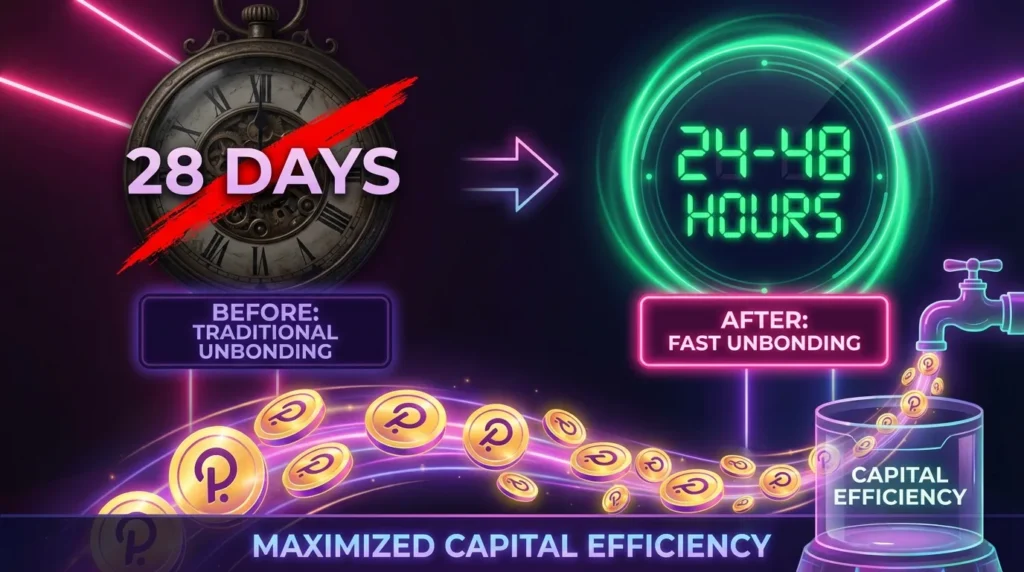
Perhaps the most practically significant change for investors: the period required to unstake DOT was reduced from 28 days to just 24–48 hours. This dramatically improves capital efficiency — stakers no longer face a month-long wait to access their funds.
Dynamic Allocation Pool (DAP)
A new mechanism directing fees and rewards to a Dynamic Allocation Pool, enabling more flexible governance control over how network revenues are distributed between validators, stakers, the treasury, and ecosystem development.
DOT Tokenomics: The Numbers That Matter
| Metric | Data |
|---|---|
| Ticker | DOT |
| Current Price | ~$1.24 (April 2026) |
| Market Cap | ~$2.1 billion |
| Rank | ~#30 |
| Circulating Supply | ~1.7 billion DOT |
| Hard Supply Cap | 2.1 billion DOT (from March 2026) |
| Annual Issuance | ~56 million DOT (~3.1%) |
| All-Time High | $54.98 (November 2021) |
| Staking APY | ~12–15% (declining as issuance falls) |
| Unbonding Period | 24–48 hours (from April 2026) |
| Spot ETF | 21Shares TDOT on Nasdaq (March 2026) |
The Developer Ecosystem
Polkadot consistently ranks among the top blockchain networks for developer activity. In 2026, it holds the #1 ranking for GitHub commits among major blockchain projects — a metric reflecting genuine ongoing engineering work rather than speculative activity.
The Substrate framework — Polkadot’s blockchain development toolkit — allows developers to build customized blockchains with minimal code. This has enabled hundreds of projects to build specialized chains as Polkadot parachains.
Polkadot Price History: The Long Descent and the Reset
2017: ICO at $0.29. Initial excitement.
2020: Mainnet launches in May. DOT begins trading around $2–5.
2021: The bull market transforms Polkadot. DOT rises from $8 at the start of 2021 to an all-time high of $54.98 on November 4, 2021 — driven by parachain auction excitement, the “blockchain internet” narrative, and broad altcoin euphoria. Market cap briefly exceeds $50 billion.
2022: Crypto winter. DOT falls from $40+ to below $5 — a decline exceeding 90%.
2023–2024: Slow recovery. Polkadot 2.0 Agile Coretime begins development. Despite strong technical development, DOT underperforms the broader market. Price recovers to $10–12 range.
2025: Continued underperformance vs. Bitcoin, Ethereum, and Solana. Community discourse about whether the infrastructure-first approach has come at the cost of user adoption. DOT falls to $2–3 range.
Early 2026: DOT trades around $1.24 — near its all-time low territory. The March 2026 tokenomics overhaul (supply cap, issuance cut, faster unbonding) represents a structural reset. The first spot DOT ETF launches on Nasdaq. The ecosystem pivots from infrastructure to applications.
What Is Polkadot Used For?
Cross-Chain Interoperability
Polkadot’s core value proposition: enabling different blockchains to communicate and share assets natively. When fully realized, this means a DeFi protocol on one parachain can access liquidity from another parachain, or a gaming application on one chain can settle transactions on a different specialized chain — all without third-party bridges.
Shared Security for New Blockchains
New blockchain projects can launch as Polkadot parachains and immediately inherit Polkadot’s economic security — rather than bootstrapping their own validator set with limited initial stake. This is a significant value proposition for new projects that want security without the cost of building it from scratch.
Governance Infrastructure
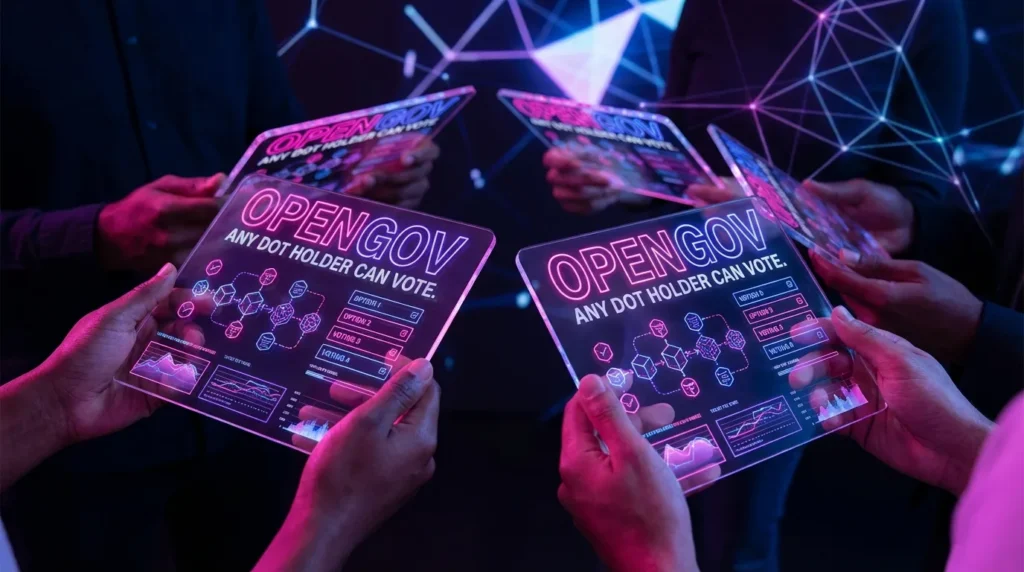
Polkadot’s OpenGov system is one of the most sophisticated on-chain governance models in crypto. Any DOT holder can propose and vote on changes, with voting power that scales based on how long they lock their DOT. The community has approved hundreds of referendums — including the March 2026 tokenomics overhaul — demonstrating genuine decentralized decision-making at scale.
Web3 Application Development
The Polkadot ecosystem hosts hundreds of applications across DeFi, NFTs, gaming, identity, and privacy. Notable parachains include Acala (DeFi), Moonbeam (Ethereum compatibility), Astar (smart contracts), and Phala (privacy computing).
Polkadot Risks: The Honest Version
Deep drawdown from ATH: DOT is ~97% below its all-time high. Even with the tokenomics reset, recovering to previous highs requires adoption levels that haven’t materialized.
The adoption gap: Polkadot has one of the best engineering teams in crypto and one of the most sophisticated technical foundations. It also has persistently low user numbers compared to Ethereum, Solana, and BNB Chain. The “Field of Dreams” problem — build it and they will come — has not played out as hoped.
Weak ETF demand: The 21Shares TDOT ETF launched in March 2026 to “tepid demand” and minimal net inflows — suggesting limited institutional interest even with a regulated product available.
Competition: The cross-chain interoperability thesis is no longer unique to Polkadot. Cosmos (IBC protocol), Ethereum L2 bridging, and various other solutions compete for the same developer mindshare.
Staking yield compression: The tokenomics overhaul reduces annual issuance, which means staking yields will gradually decline. Future returns depend more on network fee generation — which requires significant usage growth.
Community sentiment: A November 2025 community forum post described a “sentiment crisis” — fear that Polkadot’s “fertile soil” has failed to produce “meaningful fruit.” The ecosystem is aggressively pivoting strategy, but the question of whether the pivot is too late remains open.
How to Buy DOT in the US: Step by Step
Step 1: Choose a regulated exchange
- Coinbase — DOT fully supported, beginner-friendly
- Kraken — strong DOT liquidity, supports staking
- Binance US — competitive fees
Step 2: Create and verify your account
Standard KYC — government ID required.
Step 3: Deposit funds
ACH bank transfer for lowest fees. Debit card for instant access.
Step 4: Buy DOT
Search for DOT or Polkadot, enter dollar amount, confirm.
Step 5: Staking options
- Polkadot.js — official browser extension wallet, supports native staking
- Ledger — hardware wallet with DOT staking support
- 21Shares TDOT ETF — regulated staking-inclusive ETF via traditional brokerage
- Nomination pools available with as little as 1 DOT minimum
Key Polkadot Terminology for Beginners
DOT: Polkadot’s native token — used for staking, governance, and parachain bonding.
Relay Chain: Polkadot’s central coordination layer providing shared security and consensus.
Parachain: An independent blockchain connected to Polkadot’s Relay Chain, inheriting its security.
NPoS: Nominated Proof of Stake — Polkadot’s consensus mechanism using validators and nominators.
Validator: A node operator who produces blocks and validates transactions, staking DOT as collateral.
Nominator: A DOT holder who backs validators with their stake, sharing in rewards and risks.
XCM: Cross-Consensus Message Passing — Polkadot’s native cross-chain communication protocol.
Substrate: The framework for building custom blockchains that can connect to Polkadot.
Agile Coretime: Polkadot 2.0’s flexible compute resource model, replacing fixed parachain slot auctions.
OpenGov: Polkadot’s on-chain governance system allowing any DOT holder to propose and vote on changes.
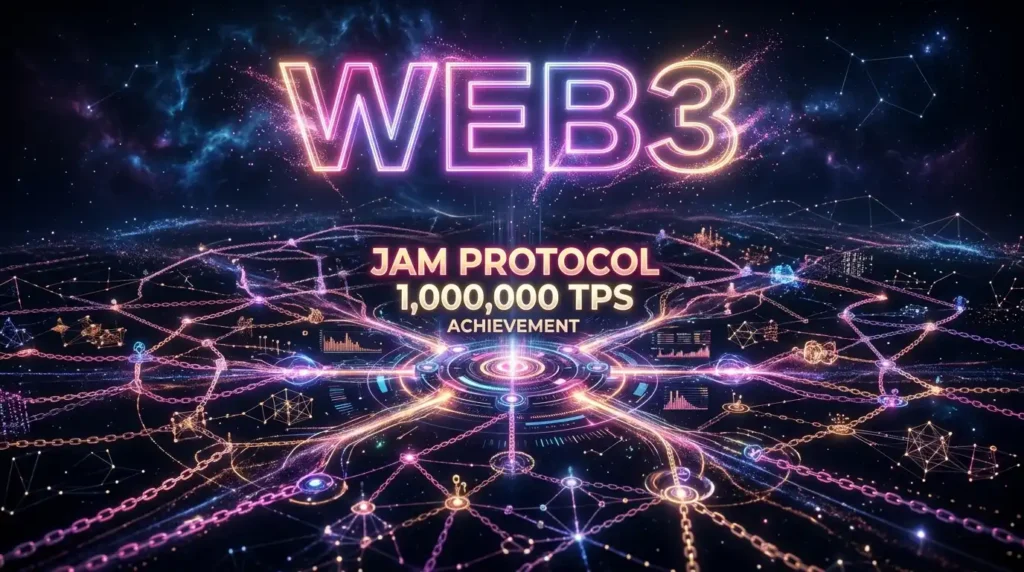
JAM: Join-Accumulate Machine — Polkadot’s next-generation protocol (“Polkadot 3.0”), targeting 1M TPS.
Web3 Foundation: The Swiss non-profit founded by Gavin Wood that created and supports Polkadot.
TDOT: The 21Shares spot Polkadot ETF launched on Nasdaq in March 2026.
Should You Buy DOT in 2026?
We are not financial advisors. Here’s the most balanced view we can offer.
The bull case for DOT: the March 2026 tokenomics overhaul is genuinely significant — the supply cap and issuance cut transform DOT’s monetary policy in a way that could attract long-term holders who previously avoided inflationary assets. Developer activity remains the strongest in crypto by GitHub metrics. The unbonding period reduction dramatically improves capital efficiency. The JAM upgrade’s potential for 1 million TPS positions Polkadot as foundational Web3 infrastructure for the decade ahead. At $1.24 — near all-time lows — the downside may be more limited than at previous price levels.
The bear case is equally honest: DOT has been one of the worst-performing major cryptocurrencies for three years. Infrastructure-first strategies take time to pay off, and the competition isn’t standing still. The ETF launched to weak demand. The community itself has acknowledged a sentiment crisis. Building the best technology doesn’t guarantee price appreciation if users and developers choose simpler alternatives.
For investors who believe in the long-term interoperability vision and the structural shift that the 2026 tokenomics reset represents — DOT at current levels deserves consideration. For anyone expecting near-term catalysts and momentum — patience would likely be required.
Disclaimer: This article is for informational purposes only and does not constitute financial advice. Cryptocurrency investments carry significant risk, including the potential loss of all invested capital. Always conduct your own research before making any investment decisions.