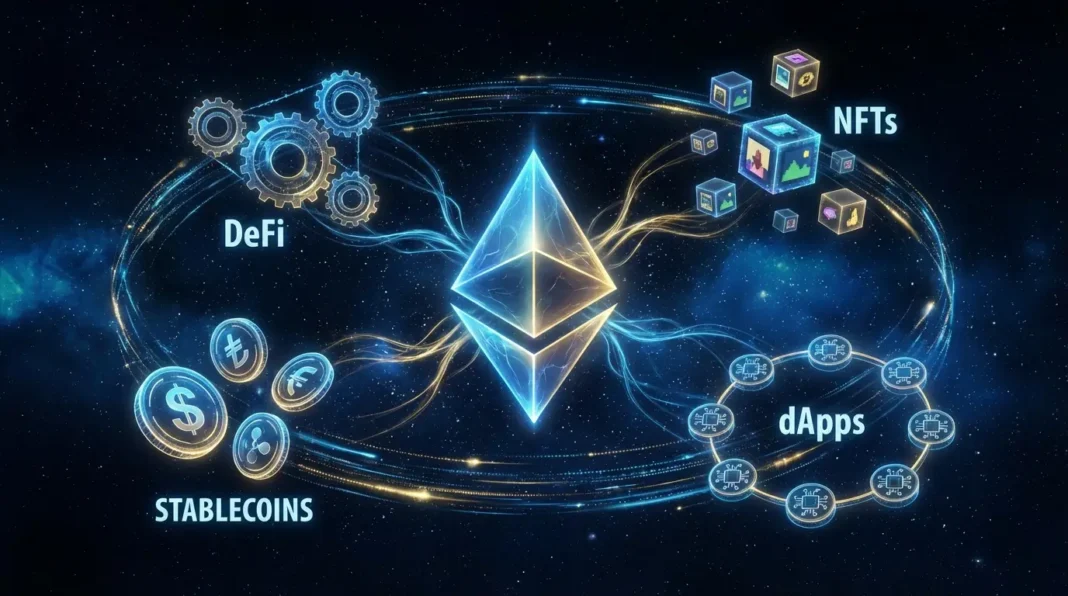
Most cryptocurrencies are governed by anonymous developers, pseudonymous validators, or decentralized communities with no formal accountability structure. Hedera does something completely different: it’s governed by a rotating council of Fortune 500 companies — Google, IBM, Boeing, Deutsche Telekom, FedEx, McLaren Racing, and 25 others — each with one equal vote.
That’s not the only unusual thing about Hedera. It doesn’t actually use a blockchain at all.
Instead, it runs on a technology called hashgraph — invented by Dr. Leemon Baird, a computer scientist who earned his PhD from Carnegie Mellon faster than any student in the school’s history. The hashgraph algorithm processes transactions in parallel rather than sequentially, achieving finality in 3–5 seconds at fees that round to essentially zero, without mining.
The result is a public distributed ledger that processes millions of transactions per day, has been classified as a digital commodity by the US SEC and CFTC, has a live spot ETF trading in the US, and counts some of the largest companies on Earth among its governors — all while remaining almost completely unknown to retail crypto investors.
That combination of enterprise adoption and retail obscurity is exactly what makes Hedera worth understanding.
The Quick Answer: What Is Hedera?
Hedera is a public distributed ledger technology (DLT) platform that enables individuals and businesses to build decentralized applications with fast, low-cost transactions. It was launched in September 2019 and is headquartered in Dallas, Texas.
Its native token is HBAR, which serves two main purposes: paying transaction fees on the network (typically fractions of a cent) and helping secure the network through a proof-of-stake mechanism.
Unlike Bitcoin or Ethereum, Hedera doesn’t use a traditional blockchain. It uses a Directed Acyclic Graph (DAG) structure called hashgraph, which allows nodes to process multiple transactions simultaneously rather than one block at a time. The practical result: faster transactions, lower fees, and greater energy efficiency — at the cost of a more centralized governance model.
As of April 2026, HBAR trades around $0.088–$0.097 and holds approximately the #25 spot on CoinMarketCap, with a market cap of roughly $3.8–$3.9 billion. There are approximately 43.3 billion HBAR in circulation from a fixed maximum supply of 50 billion.
Who Created Hedera? The Story Behind the Hashgraph
Dr. Leemon Baird is one of the most credentialed founders in crypto. A computer scientist and former US Air Force Academy professor, Baird received his PhD from Carnegie Mellon University in 2 years and 9 months — faster than anyone in the school’s history. He has over 100 publications in peer-reviewed journals and multiple patents in computer security, machine learning, and mathematics.
In 2015, Baird invented the hashgraph algorithm while working on the problem of how distributed networks can reach consensus quickly, fairly, and securely. He published the hashgraph whitepaper in 2016 and formed a company called Swirlds with his longtime friend and business partner Mance Harmon — a technology executive with a background in cybersecurity and US military contracting.
The two began testing hashgraph in enterprise environments and realized it had the potential to become public infrastructure — but only if it was governed in a way that enterprises could trust. The answer they developed was the Governing Council model.

In March 2018, Baird and Harmon publicly announced Hedera Hashgraph at an event in New York City, drawing 1,000 attendees and more than 100,000 livestream viewers. The vision was bold: a public network guaranteed not to fork, governed by the world’s leading organizations, accessible to anyone, controlled by no one.
The mainnet launched in September 2019, with 50 billion HBAR tokens minted and a 15-year distribution schedule designed to prevent any single party from accumulating controlling stake.
In August 2022, Hedera took a major step toward decentralization: the Hedera Governing Council voted to purchase the hashgraph patents from Swirlds and release the entire technology under the Apache 2.0 open source license — making it free for anyone to build on.
What Makes Hedera Different: Hashgraph vs Blockchain
This is the central technical distinction that separates Hedera from virtually every other major cryptocurrency.
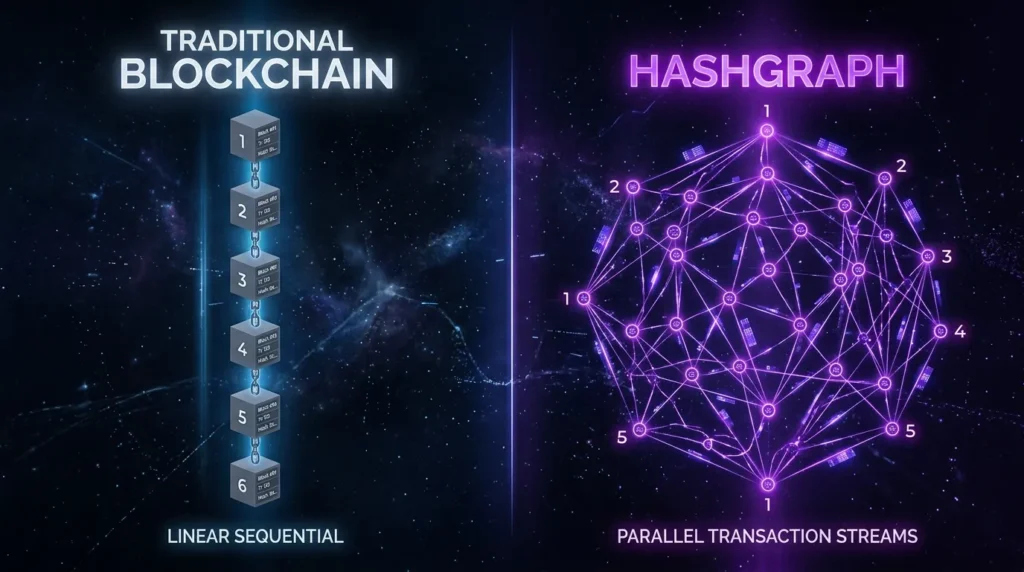
Traditional blockchains (Bitcoin, Ethereum, etc.) bundle transactions into blocks and add those blocks to a chain one at a time. Every transaction must wait for the current block to be completed, validated, and added before the next one can proceed. This creates sequential processing — and bottlenecks.
Hashgraph uses a fundamentally different data structure: a Directed Acyclic Graph, where information flows through the network via two mechanisms:
Gossip About Gossip: Every node in the network randomly shares its transaction history with other nodes — not just the transactions themselves, but also the history of what it has learned and from whom. This creates an exponentially spreading information graph. Within a few rounds of gossip, every node has full knowledge of the complete transaction history.
Virtual Voting: Because every node knows what every other node knows, votes on transaction ordering can be calculated mathematically — without nodes actually sending vote messages. This dramatically reduces network communication overhead.
The result: Hedera achieves asynchronous Byzantine Fault Tolerance (aBFT) — the highest possible level of security for a distributed system — while processing thousands of transactions per second at fees of roughly $0.0001 per transaction.
In practical terms:
- Transaction finality in 3–5 seconds (vs. minutes or hours for Bitcoin/Ethereum)
- Fees under $0.001 per transaction
- Energy consumption so low that Hedera is carbon-negative — it offsets more than it emits
- Processing capacity of up to 10,000 transactions per second
The Governing Council: The Most Unusual Thing in Crypto
Hedera’s governance model is arguably its most distinctive feature — and its most controversial.

The Hedera Governing Council consists of up to 39 leading global organizations. Each member:
- Runs a consensus node that validates transactions
- Gets exactly one equal vote on protocol decisions (regardless of company size)
- Serves a maximum of two consecutive 3-year terms before rotating out
- Cannot fork the network — a constitutional guarantee
This structure was explicitly modeled on Visa’s original 1968 governance framework: a cooperative owned and operated by competing enterprises, none of whom can dominate.
Current Council members (as of 2026) include:
Google, IBM, Boeing, Deutsche Telekom, FedEx (joined February 2026), LG Electronics, Tata Communications, Standard Bank Group, McLaren Racing (joined March 2026), DLA Piper, FIS (WorldPay), and 20+ others spanning technology, finance, energy, telecommunications, and academia across every inhabited continent.
Why does this matter?
For enterprises, it means they’re building on infrastructure they have a governance voice in — not a network run by anonymous miners they can’t hold accountable. No single company (not even Google) can unilaterally change the protocol.
For skeptics, it raises legitimate questions about decentralization. A network governed by 31 large corporations is fundamentally different from a network governed by thousands of anonymous validators. Hedera openly acknowledges this tension and positions itself as “decentralized enough” for its target use cases while maintaining the institutional accountability enterprises require.
Hedera Tokenomics: The Numbers
| Metric | Details |
|---|---|
| Current Price (April 2026) | ~$0.088–$0.097 USD |
| Market Cap | ~$3.8–$3.9 billion |
| CoinMarketCap Ranking | ~#25 |
| Circulating Supply | ~43.3 billion HBAR |
| Maximum Supply | 50 billion HBAR (fixed) |
| Consensus Mechanism | Hashgraph (aBFT, Proof of Stake) |
| Transaction Speed | 3–5 seconds finality |
| Transaction Fee | ~$0.0001 per transaction |
| All-Time High | ~$0.57 (September 16, 2021) |
| Mainnet Launch | September 2019 |
| Energy | Carbon-negative |
Key Tokenomics Details:
All 50 billion HBAR were minted at genesis in 2018. The distribution follows a 15-year schedule designed to prevent sudden supply shocks and protect network security — if tokens were distributed too quickly, a single entity could potentially accumulate enough stake to influence consensus.
Distribution breakdown at launch: ~17% to founders and employees, ~17.4% to SAFT investors (the 2018 ICO), ~12.9% to advisors and partners, with the remainder reserved for the Hedera treasury for ecosystem development and distribution over time.
Approximately 87% of the maximum supply (43.3 billion HBAR) is now in circulation, with the remaining ~6.7 billion scheduled for gradual release through 2034.
HBAR has no halving mechanism. Fees collected by the network are distributed to nodes that run the infrastructure.
Hedera’s ETF and Regulatory Status in 2026
Hedera has made significant regulatory progress in 2026 — arguably more than most tokens in its market cap tier.
SEC Commodity Classification: In March 2026, the SEC and CFTC jointly classified HBAR as a digital commodity — placing it alongside Bitcoin, Ethereum, XRP, and 13 others in the most favorable regulatory category for US-based investment products.
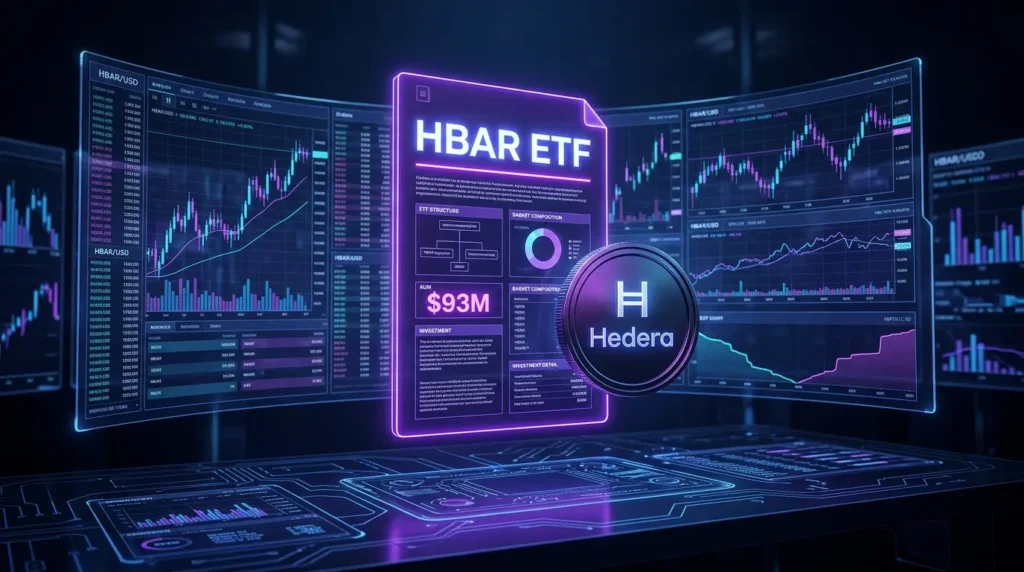
Canary Capital HBAR ETF: The first US spot HBAR ETF (ticker: HBR), filed by Canary Capital, has launched and accumulated $93 million in assets under management — providing regulated exposure to Hedera for institutional investors through traditional brokerage accounts for the first time.
Hashdex Inclusion: Hashdex expanded its Nasdaq-listed crypto ETF to include HBAR alongside Cardano and Chainlink, bringing Hedera into a multi-asset institutional product.
Digital Monetary Institute: In February 2026, Hedera joined the Digital Monetary Institute — a policy forum with central banks — further cementing its position in the regulated financial establishment.
Canary Capital ETF AUM and Price Gap: Despite $93 million in ETF assets and a commodity classification, HBAR continues trading below $0.10. This gap between institutional validation and retail price action is one of the central puzzles of the HBAR investment thesis — and one of its most cited risks.
What Hedera Is Actually Used For
Hedera’s architecture makes it particularly well-suited for enterprise use cases that require speed, low fees, and immutable audit trails:
Real-World Asset (RWA) Tokenization: According to Santiment data, Hedera ranks #1 in blockchain developer activity for real-world assets — ahead of Ethereum, Polygon, and others. The network has processed over $10 billion in tokenized settlements. Hedera’s Asset Tokenization Studio provides an open-source toolkit for issuing and managing tokenized bonds, equities, and other financial instruments.
Supply Chain and Provenance: FedEx’s February 2026 council membership specifically targets supply chain infrastructure — using Hedera’s Consensus Service to create immutable, verifiable logs of shipment events. Avery Dennison uses Hedera to track physical goods from production to consumer.
AI Agents: Hedera launched its Agent Lab in March 2026 — a browser-based platform enabling developers to build on-chain AI agents with no-code, low-code, or full custom code options. This positions Hedera at the intersection of blockchain and AI automation.
Micropayments and Consumer Rewards: AdsDax delivers instant HBAR rewards to users for ad interactions, processing millions of daily mainnet transactions. Dropp enables micropayments for content — news articles, music tracks — at cents per item.
Stablecoins and CBDC Infrastructure: Hedera’s compatibility with ISO 20022 financial messaging standards makes it a candidate for central bank digital currency infrastructure. South Korea’s Shinhan Bank tested cross-border stablecoin settlements on Hedera. The Reserve Bank of Australia has also conducted testing on the network.
DeFi: SaucerSwap operates as Hedera’s primary DEX, supporting token swaps, liquidity provision, and staking with near-zero fees.
Sustainability Tracking: Hedera’s Sustainability Studio (Guardian) enables verifiable carbon credit issuance and tracking — used by global enterprises for ESG reporting.
Hedera Price History: The Enterprise Token Paradox
HBAR has one of the more puzzling price histories in crypto — strong fundamentals consistently failing to generate proportional retail price appreciation.
2019 — Mainnet Launch: HBAR launched publicly in September 2019 at around $0.09–$0.12, declined through the end of the year as the broader crypto market stayed subdued.
2020 — Slow Build: HBAR traded in the $0.03–$0.08 range through most of 2020, with occasional spikes on partnership announcements. The addition of Google and IBM to the council generated buzz but limited sustained price action.
2021 — The Bull Run: HBAR participated in the 2021 crypto bull market, rising from under $0.05 in January to an all-time high of approximately $0.57 on September 16, 2021, briefly breaking into the top 20 by market cap. The rally coincided with broader DeFi and altcoin mania.
2022 — The Bear Market: Like everything in crypto, HBAR collapsed through 2022, eventually trading as low as $0.03–$0.04 during the depths of the bear market triggered by Luna/Terra collapse and FTX bankruptcy.
2023–2024 — Accumulation: HBAR recovered gradually with the broader market, trading in the $0.05–$0.15 range. The announcement of HBAR ETF filings in late 2024 caused a temporary spike.
2025 — ETF Launch and Stagnation: Despite the Canary Capital ETF launch in October 2025 and council expansion (FedEx, McLaren), HBAR has struggled to sustain momentum above $0.10. The token currently trades around $0.088–$0.097 — roughly 83% below its all-time high.
Binance analysts project an average HBAR price of $0.218 for 2026, representing over 140% upside from current levels — though the same analysts acknowledge the persistent gap between enterprise adoption and retail price momentum.
Hedera Risks: The Honest Assessment
The Decentralization Debate: Hedera’s council governance is fundamentally more centralized than Bitcoin or Ethereum. Critics argue that a network governed by 31 corporations — however reputable — is not truly decentralized in the way the crypto ethos demands. Hedera’s counter is that its governance structure is designed to prevent any single entity from controlling the network, which is the core property that matters.
Enterprise Adoption ≠ Token Price: HBAR has demonstrated repeatedly that real-world adoption by major corporations does not automatically translate to retail investor demand. Enterprises use the network and pay fees, but they don’t necessarily buy and hold HBAR speculatively. This structural disconnect is one of HBAR’s defining investment challenges.
Competition: Hedera competes with Ethereum, Algorand, Stellar, Ripple/XRP, and emerging Layer 2 solutions for enterprise payment and tokenization use cases. All of these competitors have larger communities and/or deeper DeFi ecosystems.
Token Supply Concentration: With significant HBAR still in Hedera’s treasury (scheduled for 15-year distribution), ongoing sell pressure from treasury operations is a structural headwind for price.
Centralization Risk: While the council rotation model prevents any single company from dominating long-term, in the short term, decisions are made by 31 large corporations — not by HBAR holders. Token holders currently have minimal governance rights.
How to Buy Hedera (HBAR) in the US
Step 1 — Choose an Exchange
HBAR is available on Coinbase, Binance.US, Kraken, and OKX. Coinbase is the most beginner-friendly option.
Step 2 — Create and Verify Your Account
Sign up, complete identity verification (government ID required), and enable two-factor authentication. Takes 5–15 minutes.
Step 3 — Add Funds
Link your bank account for free ACH transfers (1–3 business days) or use a debit card for instant purchases (1.5–3.5% fee).
Step 4 — Buy HBAR
Search for “Hedera” or “HBAR,” enter your dollar amount, and confirm. Fractional amounts are available.
Step 5 — Consider Self-Custody
Ledger and Trezor hardware wallets support HBAR. HashPack and Blade are popular Hedera-native wallets with built-in DeFi access.
Step 6 — Alternative: Buy via ETF
The Canary Capital HBAR ETF (ticker: HBR) allows you to gain HBAR exposure through a traditional brokerage account (Fidelity, Schwab, etc.) without holding crypto directly. This may be simpler for investors already using traditional brokerages.
Step 7 — Track for Taxes
Every HBAR sale or exchange is a taxable event in the US. Use CoinTracker or Koinly for accurate record-keeping.
Key Hedera Terminology for Beginners
Hashgraph: The consensus algorithm underlying Hedera — a Directed Acyclic Graph that achieves consensus faster than blockchain through gossip-about-gossip and virtual voting.
Directed Acyclic Graph (DAG): A data structure where information flows in one direction without loops, allowing parallel processing of transactions.
Gossip About Gossip: The communication protocol where Hedera nodes share not just transactions but the history of what they’ve learned — enabling rapid network-wide consensus.
Virtual Voting: A process where nodes calculate consensus mathematically without sending actual vote messages, dramatically reducing communication overhead.
aBFT (Asynchronous Byzantine Fault Tolerance): The highest security standard for distributed systems — ensuring correct consensus even if some nodes are malicious or offline.
Hedera Governing Council: The body of up to 39 rotating global enterprises that govern Hedera’s protocol, each running a node and holding one equal vote.
Hedera Consensus Service (HCS): A Hedera service that provides ordered, timestamped event logging for applications — used for supply chains, audit logs, and more.
HBAR: The native token of Hedera, used to pay transaction fees and participate in network security through staking.
Should You Buy Hedera (HBAR) in 2026?
HBAR presents one of crypto’s most genuinely unusual investment propositions.
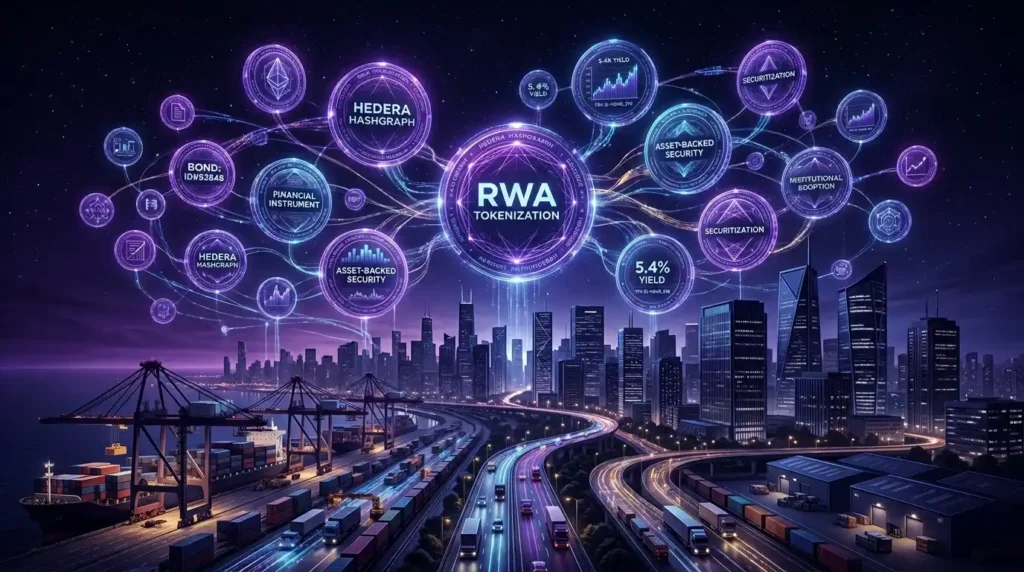
The bull case: Hedera has real enterprise adoption at a scale few altcoins can match. The network ranks #1 in RWA developer activity, has processed billions in tokenized settlements, is governed by Fortune 500 companies, has a live spot ETF, and just received SEC commodity classification. At roughly $3.8 billion market cap — trading 83% below its all-time high — it’s arguably pricing in none of this adoption. If enterprise tokenization grows into a multi-trillion dollar market, Hedera is positioned to capture a significant share.
The bear case: HBAR has a documented history of enterprise partnerships failing to generate retail price momentum. Token holders currently have minimal governance rights. The 15-year distribution schedule creates structural sell pressure. And the “decentralization” debate may never fully resolve in HBAR’s favor relative to truly permissionless networks.
The honest bottom line: If you believe enterprise blockchain adoption is real and growing — and the evidence increasingly suggests it is — Hedera has the most credentialed team, the most impressive council, and some of the strongest institutional partnerships in the space. But history shows that “correct” technology and strong enterprise adoption don’t guarantee token price appreciation in the timeframe that matters to individual investors.
Consider it a long-cycle thesis rather than a near-term momentum trade.
Not a blockchain. Governed by Google. McLaren approved. 🏎️
Disclaimer: This article is for informational purposes only and does not constitute financial advice. Cryptocurrency investments carry significant risk, including the potential loss of all invested capital. Always conduct your own research before making any investment decisions.